

December 18, 2025
You’re reading John McWhorter’s newsletter. Every week, McWhorter, a Columbia University linguist, explores how race and language shape our politics and culture. Enjoy the edition below and look for future newsletters in your inbox on Thursdays.
Pablo Delcan
The words and phrases of 2025

It was a year of so much politics and so much culture, a year of so many hopes and so many fears. But however you experienced 2025, you did it through language, the ever-evolving tool that both describes the world we inhabit and also responds to it, changing and shifting to meet the moment. “Slop,” “rage bait” and “parasocial” have all been named as the term of the year by the big dictionary franchises. Those are good choices, but here are the seven words and phrases that, to me, most closely represent the past year of our lives.
1. Groyper. Followers of the archconservative, openly racist and antisemitic, recreationally combative commentator Nick Fuentes take their name — or did they give it? — from a sourish, homely cartoon froglike figure that they treat as their avatar. They’ve been around since the 2010s, but this was the year that Fuentes, previously a sideshow, entered the MAGA mainstream. The death of Charlie Kirk, who led a competing swath of followers, was one reason; another was a long and respectful interview by Tucker Carlson that divided conservatives. Along the way, “groyper” moved from the dark corners of the internet to widespread recognition.
2. No Kings. When President Trump took to social media and declared “Long Live the King,” and the White House upped the ante with an image of Trump wearing a crown, organizers on the left offered a devastatingly simple response: No. No King Trump, no King Anyone Else, no kings. And they punctuated that response with a series of huge, crossnational protest marches, the very existence of which proved that they were right. The word “Occupy” served a similar rhetorical function in 2011, taking extreme economic inequality out of the realm of concept and into the stark physical reality of bodies on the street.
3. 6-7. You know I had to mention this one, right? “6-7,” the thing kids insist on articulating — with a knowing giggle — every time the two digits appear in that order, has been a subject of ongoing confusion by adults. For kids, that’s half the fun. Eventually those adults started consoling one another with the explanation that the expression has no meaning at all. That’s wrong, a mistake based on the false belief that all language serves to communicate facts. Language — starting with plain old “please” and “hello” — also serves social functions. Did “6-7” emerge from a line in a rap song that refers to the height of a basketball player? It’s almost irrelevant. For Gen Alpha folks, the phrase is a form of group identification: You have to be a teen or tween to get it. This is the function that slang has always served. “6-7” is unusual only in that — unlike “cool” or “lit,” say — it did not emerge out of a word or expression already in circulation. It’s a good bit. And the longer that grown-ups scratch our heads about it, the more such gags are likely to emerge.
4. It’s the phones. 2025 wasn’t the first time anyone lamented the influence of ubiquitous cellphones on our kids and our culture, but it was the year that this three-word declaration became the go-to formulation. Today it’s less a sentence one composes word by word than a set expression, a short, handy reference to a larger argument, advanced by, among others, the psychologists Jonathan Haidt and Jean Twenge, that smartphones are transforming children’s lives and brains for the worse.
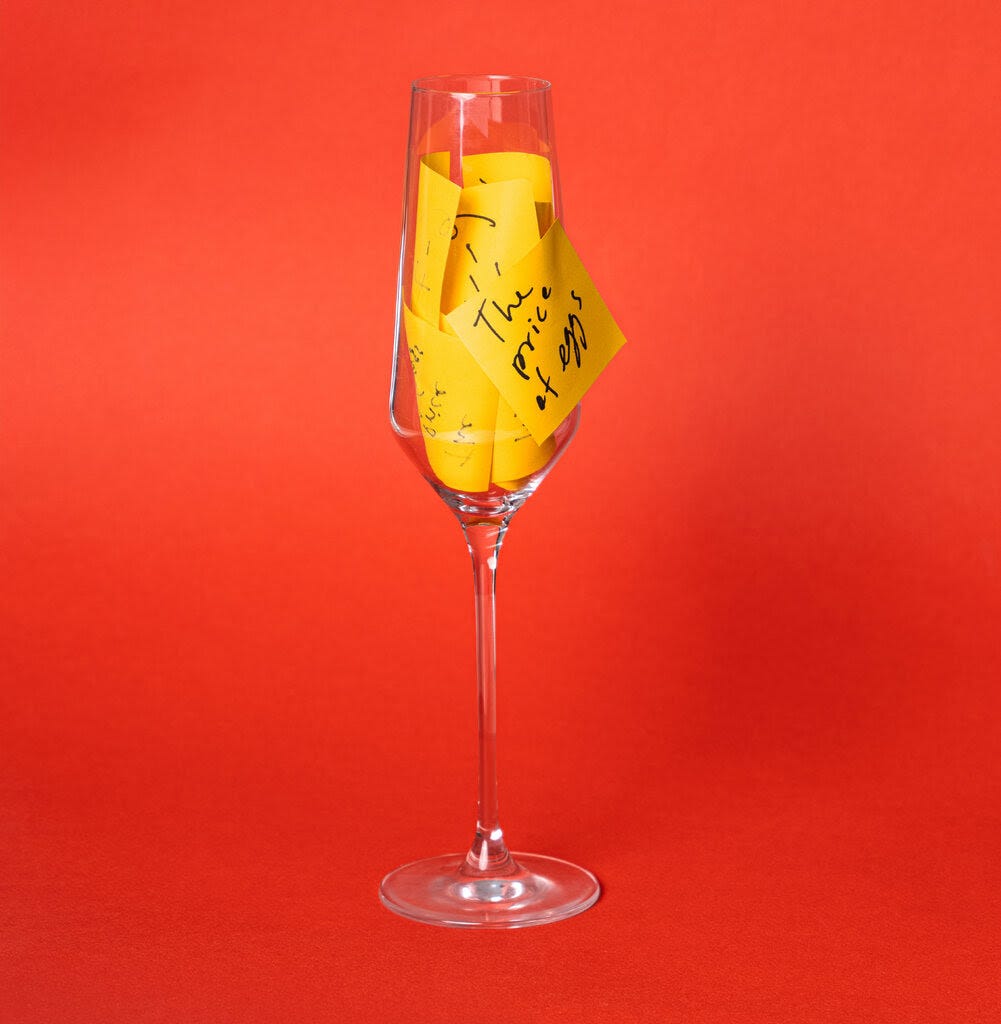
5. The price of eggs. This humble home economics phrase became a stand-in for inflation but also for more than that — its rise and fall, the effect on consumers’ lives, the way that effect is influencing our nation’s politics and the discourse that has arisen to explain that influence. It’s what linguists call metonymy. Why eggs? Their price did jump substantially, but like so much of what happens to language, there is an element of chance. Lately the Democrats’ focus on this concept, which they feel plays to their advantage, has been so focused that it has squeezed the four words down to just one: “affordability.” There’s no perfect measure for how often the word was used, but digital search tools indicate that significantly more news articles included it this year than last.
6. Giving. Don’t groan. I know that the expression — as in “That song is giving Taylor Swift” or “That dress is giving old lady”— has been around for a while, originating in Black gay and ballroom culture, along with “slay” and “serve.” But 2025 is the year that “giving” became what linguists refer to as entrenched, meaning it’s no longer a dash of wit, color or attitude; it’s just normal everyday speech. A sign that this is happening is when members of Gen Alpha casually use the term with an adult (such as me) and it starts to feel as though it should be in the dictionary rather than just on lists of savory slang.
7. He and she. I’ve been saying for a while that the gender-neutral “they/them” was going to become even more widespread. As a linguist who studies the ways language changes, I noted the rise in people resisting the gender binary and got caught up in — and perhaps even biased toward — what I processed as a pronominal revolution. But surveys show that the number of young people identifying as nonbinary has decreased considerably over the past two years. Binary genders are on the rise again, and therefore so are the pronouns most closely associated with them. By the way, I also thought “Corona” would crowd out “Covid” as the general term for the virus, because it’s more melodious and lends itself better to wordplay. Really, predictions are always a risk, regardless of what you know and what feels right.
Can you think of any other words or expressions that would have stumped you if someone had said them a year ago? And is my take on “giving” and “they/them” just a matter of my not getting around enough?
Read past editions of the newsletter here.
If you’re enjoying what you’re reading, please consider recommending it to others. They can sign up here.
Have feedback? Send me a note at McWhorter-newsletter@nytimes.com.

The New York Times