
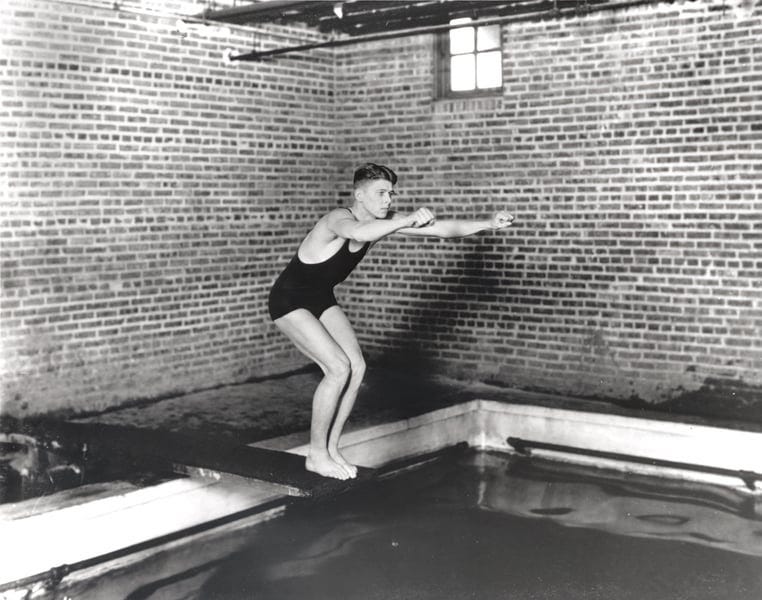
Ronald Reagan on Eureka College Swim Team Diving from Diving Board in Eureka, Illinois, 1928-32, National Archives Identifier 75857021
From the Territory of Montana to the Republic of Vietnam: Researching Native American Veterans in the National Archives, 1881–1966
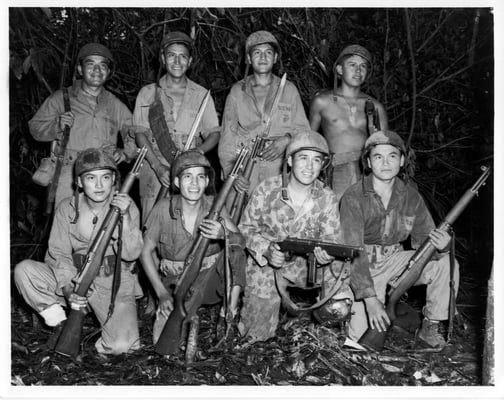
Native Americans have a long and distinguished history of service in the United States Armed Forces. Using a host of records from across National Archives facilities, this talk will explore how National Archives records can be used to reconstruct their lives and
service, using case studies from the Indian Wars, World War II, and the Vietnam Conflict.
Photograph of Navajo Code Talkers Serving with a Marine Signal Unit, National Archives Identifier 100378141
Mapping the 1950 Census: Census Enumeration District Maps at the National Archives
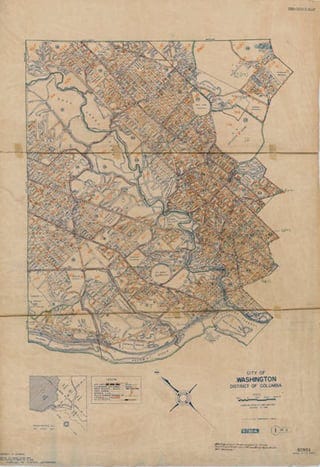
A census enumeration district was an area that could be covered by a single enumerator, or census taker, in one census period. Enumeration districts varied in size from several city blocks in densely populated urban areas to an entire county in sparsely populated rural areas. This presentation will focus on locating and using census enumeration district maps, with an emphasis on maps from the 1950 census.
1950 Census Enumeration District Maps – Washington, District of Columbia (DC) – Washington – Washington DC – ED 1-1 to 1295, National Archives Identifier 18655909
Video Presentation slides/handout
Passport Records: Passport Applications at NARA, 1790s–1925
Passports are documents that prove a person’s identity and citizenship and have been required for most foreign travel since 1941. This lecture will discuss the genealogical value of U.S. passport applications and related records, 1795–1925, that are held by the National Archives and Records Administration, and will focus on records that are available online.
Video Presentation slides and handout
Civilians at War: Records of Participation in U.S. Military Conflicts
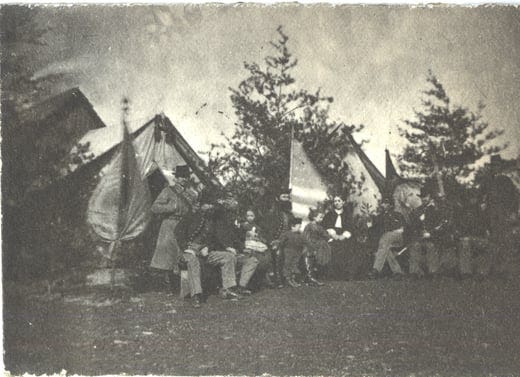
This presentation discusses ways in which civilians supported a war or were directly affected by it, with a focus on the American Revolution to World War I. These wars provided opportunities for employment by civilian or military agencies to provide
goods, services, or loans. Other individuals sought reimbursement after suffering property loss. We’ll show examples of online records that document these relationships with the federal government (ca. 1776–1918) and Confederate States government (1861–1865).
Camp Scene, Group of Officers and Ladies, National Archives Identifier 167247176
Video Presentation slides and handout
Alien Files (A-Files): Researching Immigrant Ancestors at the National Archives
Learn about the Alien Files (A-Files), a rich source of biographical information for family research. The A-Files contain United States immigrant documents generated and collected since the mid-20th century with a wealth of data, including visas, photographs, applications, correspondence, and more. Participants in this session will understand who should have an A-File, discover online search methods to determine whether records are available at the National Archives, and gain the skills to successfully place a request.
Video Presentation slides/handout
Basic Military Records at the National Archives: Revolutionary War to 1917
This presentation outlines basic military records held at the National Archives Building in Washington, DC. The records cover the “Old Military” period from the Revolutionary War to 1917 and are characterized by different types of service, including volunteer service (state regiments and militias) as well as the Regular military (Army, Navy, and Marine Corps). Each type of service was documented differently, but there are also basic records common to all types of service.
Video Presentation slides and handout
Merchant Marine Records at the National Archives at St. Louis
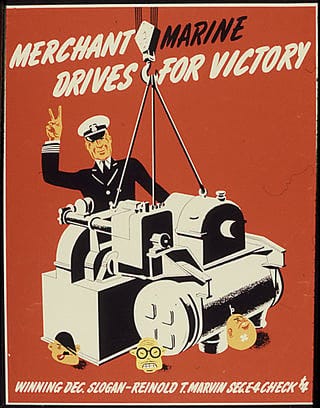
The National Archives and Records Administration (NARA) recently accessioned the core collection of Merchant Marine Licensing Files, which are now open to the public for the first time at the National Archives at St. Louis. Theresa Fitzgerald will discuss these holdings as well as our auxiliary collections of Merchant Marine records that are complex and closely connected.
Merchant marine drives for victory, National Archives Identifier 535188
Video Presentation Slides/Handout
It is important to preserve your own family records and share those stories. In these Genealogy Series presentations, National Archives experts give advice on how to preserve, protect, and respond to emergencies.
Planning, Techniques, and Strategies for Preserving Family Collections and Stories
Learn how professionals preserve records with surveys to create a plan, use archival techniques, and select storage strategies. Surveys help you create a plan of action to determine record treatment, housing, and storage. Archival techniques can be used on your own personal collections of paper-based materials, photographs, and objects. Strategies include how to identify storage needs for papers and photographs. We will tie this all together and show you how significant documents and records help to tell family stories.
Video Presentation slides and handout
Disaster Preparedness and Response for Family Collections
Fires, floods, hurricanes, tornadoes, and earthquakes are scary scenarios for those who treasure and maintain their family history. Learn what you can do ahead of time to plan for emergencies and minimize risk to your family heirlooms as well as what to expect to do after a disaster to salvage damaged items.
Preserving and Digitizing Personal Photo Albums and Scrapbooks
Preserving photo albums and scrapbooks can be especially challenging, often because they are bound and contain a variety of problematic materials. This session addresses how to work with challenging materials commonly found in personal scrapbooks and albums, how to maintain the integrity of the arrangement, and how to store photo albums and scrapbooks appropriately. Pro tips for home users include ways to digitize albums, organize electronic files, and preserve them as electronic records. Examples come from both National Archives and personal collections.
Video Presentation Slides and Handout
Tips and Tools for Engaging Family with Your Research Finds
As the family historian, you have amassed information and records that will one day pass to the next family historian. How do you share your findings with others? How to engage young family members involved with all your hard research may be another story. Education staff will demonstrate fun and engaging ways to connect research to your family, including younger family members. This lecture will highlight activities related to our most popular genealogy records, such as Immigrant Ship Arrivals, U.S. Census Records, Naturalization records, and Military and Pension files. The presenters will also demonstrate new ways to share your research finds online, using social media tools.
Video Presentation Slides/Handout
![Photograph of a Group of Immigrants Outside a Building on Ellis Island [cropped]](https://substackcdn.com/image/fetch/$s_!PIvB!,f_auto,q_auto:good,fl_progressive:steep/https%3A%2F%2Fsubstack-post-media.s3.amazonaws.com%2Fpublic%2Fimages%2F276cbfd5-6ab6-4eaf-b3f5-7de5db9ef486_891x313.jpeg "Photograph of a Group of Immigrants Outside a Building on Ellis Island [cropped]")