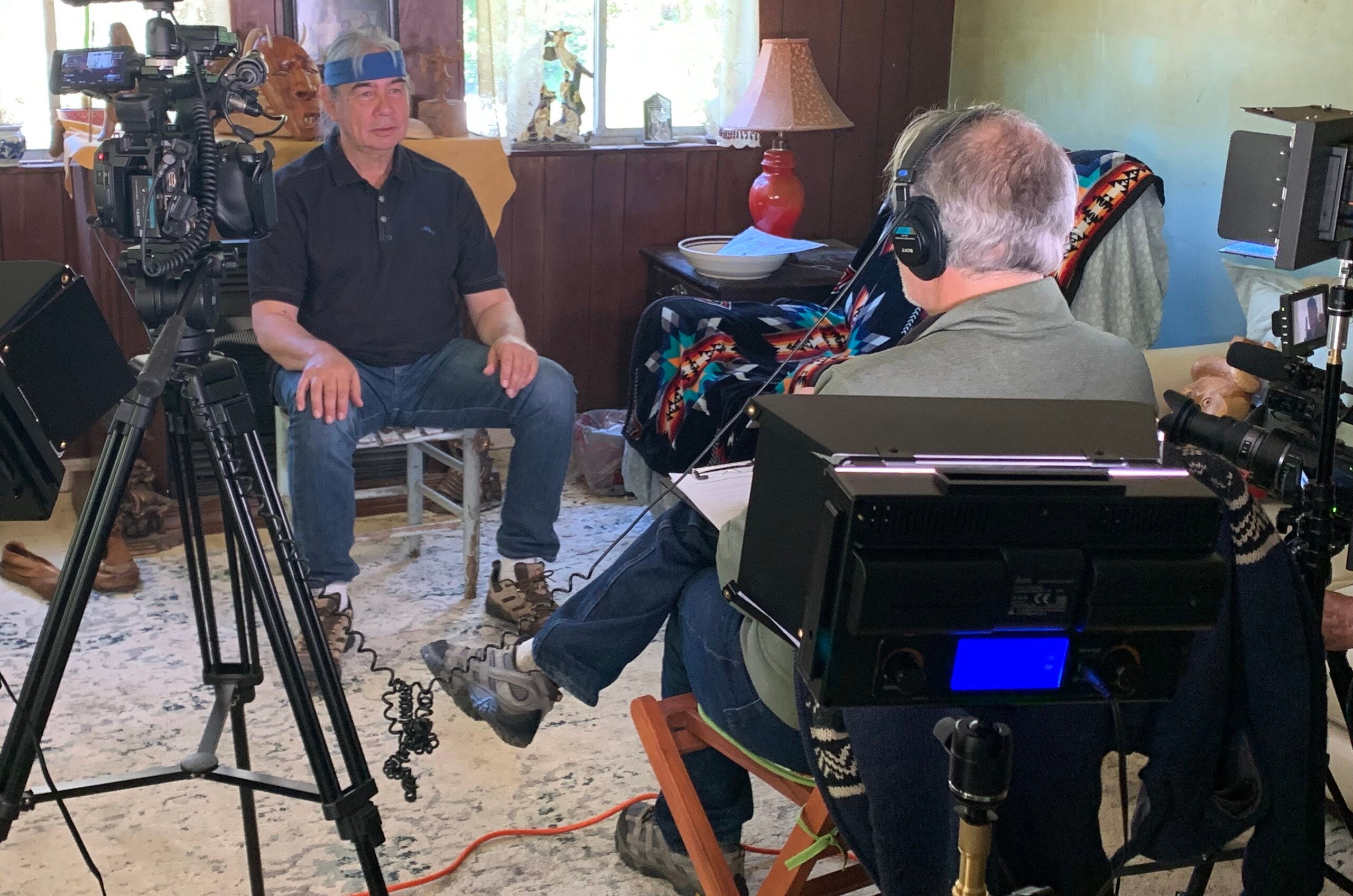
TRANSCRIBING AND TRANSCRIPTION–Why Transcribe?

TRANSCRIBING AND TRANSCRIPTION–Why Transcribe?

Why Transcribe?

The reason for transcripts—are to record, to illuminate, to re-present, and to facilitate analysis. –Willow Roberts Powers, Transcription Techniques for the Spoken Word, 2.

The transcribed interview is much easier for researchers to use than an audio tape. There is value to listening to a transcript, but researchers overwhelmingly prefer a transcript for ease and speed of use. 

A corrected transcript may be more accurate and complete because the recorded works were put down in writing while the narrator was still available to clear up obscurities.  Words that are hard to hear can be checked by the actual speaker;  questions that were inadequately answered can be expanded by written comments.

You have something to show for your efforts.  A permanent record.  A monument to a life.

It’s generally expected by the scholarly community.

The Time and Cost of Transcribing

Transcribing is hard, time-consuming work.  Many people think it is also mechanical, neither challenging nor interesting.  They are, ultimately, wrong.  For those of us with an interest in human beings and language, the work of transcribing broadens our experience of speech, gives the analytical mind much more to play with than the text itself ever well, and strengthens our memory for the work that lies ahead….We talk a great deal; the opportunity to do nothing but listen is a rare treat. –Willow Roberts Powers, Transcription Techniques for the Spoken Word, 10.

You can expect to expend an average of six to twelve typing hours for each hour of recording.  Then it will have to be edited, corrected, and final editing.  The last quote I got for a transcription (2019) was $8 a transcribed page which is about $120 for an hour interview. This is something to plan for in your budget if you don’t plan doing the transcription yourself. 

If you do plan to do the transcription yourself, you’ll need to budget your time. If you have good transcription software and a foot pedal, it will still take 3-6 minutes of transcription for audio, so you can anticipate 3 to six hours for an hour of audio. Donald Ritchie recommends every interviewer does at least one transcription to understand the importance of a good quality recording. This may also encourage you to avoid “uh-huh” and other interruptions during an interview.

TRANSCRIBING AND TRANSCRIPTION–Why Transcribe?

TRANSCRIBING AND TRANSCRIPTION–Why Transcribe?

Why Transcribe?

The reason for transcripts—are to record, to illuminate, to re-present, and to facilitate analysis. –Willow Roberts Powers, Transcription Techniques for the Spoken Word, 2.

The transcribed interview is much easier for researchers to use than an audio tape. There is value to listening to a transcript, but researchers overwhelmingly prefer a transcript for ease and speed of use. 

A corrected transcript may be more accurate and complete because the recorded works were put down in writing while the narrator was still available to clear up obscurities.  Words that are hard to hear can be checked by the actual speaker;  questions that were inadequately answered can be expanded by written comments.

You have something to show for your efforts.  A permanent record.  A monument to a life.

It’s generally expected by the scholarly community.

The Time and Cost of Transcribing

Transcribing is hard, time-consuming work.  Many people think it is also mechanical, neither challenging nor interesting.  They are, ultimately, wrong.  For those of us with an interest in human beings and language, the work of transcribing broadens our experience of speech, gives the analytical mind much more to play with than the text itself ever well, and strengthens our memory for the work that lies ahead….We talk a great deal; the opportunity to do nothing but listen is a rare treat. –Willow Roberts Powers, Transcription Techniques for the Spoken Word, 10.

You can expect to expend an average of six to twelve typing hours for each hour of recording.  Then it will have to be edited, corrected, and final editing.  The last quote I got for a transcription (2019) was $8 a transcribed page which is about $120 for an hour interview. This is something to plan for in your budget if you don’t plan doing the transcription yourself. 

If you do plan to do the transcription yourself, you’ll need to budget your time. If you have good transcription software and a foot pedal, it will still take 3-6 minutes of transcription for audio, so you can anticipate 3 to six hours for an hour of audio. Donald Ritchie recommends every interviewer does at least one transcription to understand the importance of a good quality recording. This may also encourage you to avoid “uh-huh” and other interruptions during an interview.

TODAY’S DOCUMENT FROM THE NATIONAL ARCHIVES

TODAY’S DOCUMENT FROM THE NATIONAL ARCHIVES

Today’s Document

Some of our documents capture landmark moments in U.S. history, such as this 1783 map showing the borders of the newly independent United States.

Map of the United States of America Laid Down from the Best Authorities Agreeable to the Peace of 1783, National Archives Identifier 31491106

Thanks for reading Capturing Voices! Subscribe for free to receive new posts and support my work.

Others show tantalizing glimpses of everyday life in a vanished world.  One series of photographs we find particularly interesting show the people displaced by the Tennessee Valley Authority in 1938.  Here is a family picture we recently shared, showing the Glandon family in their home:

“The Glandon family around the fireplace in their home at Bridges Chapel near Loydston[sic], Tennessee. Glandon’s wife plays both the guitar and the organ.” National Archives Identifier 532689

Recently, we shared this deposition of George Rheims, from an Admiralty case for limiting the liability of the White Star Line for the sinking of the Titanic.  Rheims describes seeing the iceberg through a window in the corridor and jumping off the ship before it went down.  You can read his whole account here.

Deposition of George Rheims, National Archives Identifier 6212861

Other records are a bit fun.  Here is the death certificate of Merian C. Cooper, a soldier in World War I.  He added a handwritten note informing the Army that he was not, in fact, dead.  Cooper went on to direct the movie King Kong about 15 years later.

Death Certificate for Merian C. Cooper, National Archives Identifier 7787194

We also shared this photograph of First Lady Nancy Reagan on the set of the 1980’s sitcom Diff’rent Strokes (called “Different Strokes” in the photo’s official title).

Nancy Reagan Holds a T-Shirt During Rehearsal and Taping of Television Show “Different Strokes” with Conrad Bain, Gary Coleman, Todd Bridges, Dana Plato, and Mary Jo Cattlett at Universal Studios in Los Angeles California, National Archives Identifier 75852697

Interested in seeing more?  You can follow the Today’s Document account on X (Twitter), Tumblr, and Facebook.

Thanks for reading Capturing Voices! Subscribe for free to receive new posts and support my work.

TODAY’S DOCUMENT FROM THE NATIONAL ARCHIVES

TODAY’S DOCUMENT FROM THE NATIONAL ARCHIVES

Today’s Document

Some of our documents capture landmark moments in U.S. history, such as this 1783 map showing the borders of the newly independent United States.

Map of the United States of America Laid Down from the Best Authorities Agreeable to the Peace of 1783, National Archives Identifier 31491106

Thanks for reading Capturing Voices! Subscribe for free to receive new posts and support my work.

Others show tantalizing glimpses of everyday life in a vanished world.  One series of photographs we find particularly interesting show the people displaced by the Tennessee Valley Authority in 1938.  Here is a family picture we recently shared, showing the Glandon family in their home:

“The Glandon family around the fireplace in their home at Bridges Chapel near Loydston[sic], Tennessee. Glandon’s wife plays both the guitar and the organ.” National Archives Identifier 532689

Recently, we shared this deposition of George Rheims, from an Admiralty case for limiting the liability of the White Star Line for the sinking of the Titanic.  Rheims describes seeing the iceberg through a window in the corridor and jumping off the ship before it went down.  You can read his whole account here.

Deposition of George Rheims, National Archives Identifier 6212861

Other records are a bit fun.  Here is the death certificate of Merian C. Cooper, a soldier in World War I.  He added a handwritten note informing the Army that he was not, in fact, dead.  Cooper went on to direct the movie King Kong about 15 years later.

Death Certificate for Merian C. Cooper, National Archives Identifier 7787194

We also shared this photograph of First Lady Nancy Reagan on the set of the 1980’s sitcom Diff’rent Strokes (called “Different Strokes” in the photo’s official title).

Nancy Reagan Holds a T-Shirt During Rehearsal and Taping of Television Show “Different Strokes” with Conrad Bain, Gary Coleman, Todd Bridges, Dana Plato, and Mary Jo Cattlett at Universal Studios in Los Angeles California, National Archives Identifier 75852697

Interested in seeing more?  You can follow the Today’s Document account on X (Twitter), Tumblr, and Facebook.

Thanks for reading Capturing Voices! Subscribe for free to receive new posts and support my work.

So, should you put comma after sentence-initial so?

So, should you put comma after sentence-initial so?

While the traditional role of so as a conjunction does not require using a comma after a sentence initial so, when so appears at the beginning of a sentence as an interjection or discourse marker in informal speech, it should be followed by a comma. 

If you struggle identifying whether a sentence-intial so should be followed by a comma, here is a simple explanation that might help you out!

Thanks for reading Capturing Voices! Subscribe for free to receive new posts and support my work.

Whenever you encounter a sentence-initial so, you have to ask yourself: 

a) Is so acting as a coordinating conjunction (see image below)?

In the example above, so HAS meaning. It establishes that “I had to eat Top Ramen for every meal” is the result of “I was broke all week”. If so has meaning and is acting as a coordinating conjunction that ties together one clause to the previous one, then you SHOULD NOT put a comma after it at the beginning of a sentence. Coordinating conjunctions DO NOT take a comma after them when they appear at the beginning of a sentence. Would you put a comma after but if the sentence begins with but? You wouldn’t! 

b) Or is it only an interjection without meaning? See this example:

Speaker 1:

Ah, I hated it. But yeah, you learn a lot. You don’t realize how much you’re learning as you—

Speaker 2:

That’s right, yeah.

Speaker 1:

So, you go overseas, and I know that when you were halfway through, Normandy was happening. 

Speaker 1 is changing the subject completely in this interview. There is no cause-result connection between a previous clause or sentence and what he says next! If that’s the case, you SHOULD put a comma after that sentence-initial so

In summary: 

CONJUNCTION –> ESTABLISHES CAUSE-RESULT RELATIONSHIP –> DOES NOT TAKE COMMA

INTERJECTION –> NO RELATIONSHIP –> TAKES COMMA

Thanks for reading Capturing Voices! Subscribe for free to receive new posts and support my work.

So, should you put comma after sentence-initial so?

So, should you put comma after sentence-initial so?

While the traditional role of so as a conjunction does not require using a comma after a sentence initial so, when so appears at the beginning of a sentence as an interjection or discourse marker in informal speech, it should be followed by a comma. 

If you struggle identifying whether a sentence-intial so should be followed by a comma, here is a simple explanation that might help you out!

Thanks for reading Capturing Voices! Subscribe for free to receive new posts and support my work.

Whenever you encounter a sentence-initial so, you have to ask yourself: 

a) Is so acting as a coordinating conjunction (see image below)?

In the example above, so HAS meaning. It establishes that “I had to eat Top Ramen for every meal” is the result of “I was broke all week”. If so has meaning and is acting as a coordinating conjunction that ties together one clause to the previous one, then you SHOULD NOT put a comma after it at the beginning of a sentence. Coordinating conjunctions DO NOT take a comma after them when they appear at the beginning of a sentence. Would you put a comma after but if the sentence begins with but? You wouldn’t! 

b) Or is it only an interjection without meaning? See this example:

Speaker 1:

Ah, I hated it. But yeah, you learn a lot. You don’t realize how much you’re learning as you—

Speaker 2:

That’s right, yeah.

Speaker 1:

So, you go overseas, and I know that when you were halfway through, Normandy was happening. 

Speaker 1 is changing the subject completely in this interview. There is no cause-result connection between a previous clause or sentence and what he says next! If that’s the case, you SHOULD put a comma after that sentence-initial so

In summary: 

CONJUNCTION –> ESTABLISHES CAUSE-RESULT RELATIONSHIP –> DOES NOT TAKE COMMA

INTERJECTION –> NO RELATIONSHIP –> TAKES COMMA

Thanks for reading Capturing Voices! Subscribe for free to receive new posts and support my work.