
Idiomatic Expressions: 7 Phrases That Are Just So Metal

Idiomatic Expressions: 7 Phrases That Are Just So Metal

Lead foot

Despite its reputation, lead is not the heaviest of the naturally occurring metals. That honor belongs to osmium (if you’re going by density) or plutonium (if you’re going by its atomic mass). But lead, traditionally used in weighted objects such as plumb lines (the Latin plumbum means “lead,” after all) has historically been the go-to element when you want to describe something as immoderately heavy.

She was all alone in her misery, and could see no way out of it. The diamonds were heavy as a load of lead within her bosom. And yet she had persevered.
— Anthony Trollope, The Eustace Diamonds, 1871

In the 16th century, the adjective leaden-footed described one who moved slowly. But when you give such a foot to a person operating a vehicle with an accelerator pedal, the image becomes one of a motorist driving at high speeds.

If you’ve been known to have a lead foot, you might want to watch out. Drivers in Lexington will soon see several city roads transition from having a 35 mph speed to a 25 mph limit.
— WKYT.com, 5 Dec. 2018

Gold standard

The term gold standard refers to a system that uses a supply of gold as the backing for a currency to regulate its value. The United States stopped using the gold standard during the Great Depression, but the phrase still gets used for a successful thing against which others are judged.

One seemingly obvious answer is positive train control. The federally mandated safety system, which relies on radio and satellite-based technology to control speeds and prevent crashes and derailments, is considered the gold standard for safety on the nation’s railways
— John Aguilar, The Denver Post, 14 Feb. 2019

Gold’s status as an element of value was propelled chiefly by its luster and scarcity, and gold is often reserved for top-ranking achievements (such as gold medals awarded to victorious athletes in the Olympics) or objects of desire, such as the Golden Fleece.

Tin ear

Tin is a malleable silver-white element used in a number of alloys, including bronze and pewter.

The phrase tin ear has come to be equated with deafness—whether demonstrated in a lack of appreciation for the subtleties of tone (as in music) or obtuseness to the nuances of what someone is saying.

Yet, while reviewers argue theme and technique in great detail, when it comes to humor they seem to have a collective tin ear. If humor is noticed at all, it is often dismissed as simply slick or clever.
— David Kirby, The New York Times Book Review, 23 Dec. 1990

The choice of tin likely has nothing to do with the properties of tin. (It’s a good conductor, which would seem to help in the delivery of electrical signals.) Some have ascribed the phrase to the onetime use of metal ear trumpets by the hard of hearing; others connect tin to tinnitus, the medical term for ringing in the ears.

The term cauliflower ear once was used with the same meaning as tin ear, but the former now more often means an ear that is bruised and swollen (as from receiving a boxer’s punch).

Iron fist

To rule with an iron fist (or hand) is to preside over a country or group in a very strict and often cruel way.

Iron is one of Earth’s most abundant metals, and consequently among the most frequently used. In its pure form it is also silver-white and relatively soft and malleable.

The association of iron with mercilessness likely comes from the metal’s use to make sturdy alloys such as steel and cast iron (as used in cooking skillets). British Prime Minister Margaret Thatcher was given the nickname “The Iron Lady” due to her reputation for being fierce and unyielding.

Silver screen

Silver is often mentioned alongside gold for its luster and value, and hence appears in a number of expressions pertaining to opulence. But while silver screen does evoke the glitz and glamour of Hollywood stardom, the term did in fact refer to a kind of projection screen used in the early years of the industry. The surface of the screen was embedded with silver (more often aluminum) to enhance its reflective capacity. By the 1920s, silver screen had become an alliterative metonym for the movie business.

Use your intelligence, Jeeves. Reflect what proposing means. It means that a decent, self-respecting chap has got to listen to himself saying things which, if spoken on the silver screen, would cause him to dash to the box-office and demand his money back.
— P. G. Wodehouse, Right Ho, Jeeves, 1934

Platinum blonde

Platinum is a silver-white precious metal often bought as an investment, just like gold and silver, and while platinum is scarcer, its price tends to fluctuate due to supply and demand. The recording industry values platinum over gold in its sales rankings: an album achieves gold-record status when it sells 500,000 copies, while one that sells a million copies is certified platinum.

The term platinum blonde uses the metal’s color as a comparison for the color of hair that has been bleached. One of the first actresses labelled with the term was Jean Harlow, who starred as the title character in the 1931 film Platinum Blonde, directed by Frank Capra. While the color can be achieved through treatments such as hydrogen peroxide, Harlow’s stylist purportedly used actual chlorine bleach on the actress’s head, which some have speculated led to health problems for Harlow, who died at age 26.

Brass tacks

Brass tacks are details of immediate practical importance. The term is often found in the phrase get down to brass tacks.

“Oh, I know what you’re wondering!” he flared out. “Would I a-spit on it in the pinch? That’s what’s eating you. I’ll answer. Straight out, brass tacks, I WOULD. Put that in your pipe and smoke it.”
— Jack London, “Whose Business Is To Live,” 1922

Brass is an alloy of copper and zinc, used in plumbing fixtures, musical instruments, and fastening items (such as pins, bolts, and screws). Brass also carries the association of boldness; to be brazen is to be bold and self-assured to the point of disrespect, but brazen can also mean “made of brass.”

Although no one knows for certain, some have attributed get down to brass tacks to the brass-headed fasteners used to secure upholstery to the framework of furniture. A craftsperson needing to pull out the tacks to remove the upholstery might be equated with the act of getting to the heart of the matter. But that is only one of many theories circulated about the phrase.

Thanks for reading Capturing Voices! Subscribe for free to receive new posts and support my work.

Idiomatic Expressions: 7 Phrases That Are Just So Metal

Idiomatic Expressions: 7 Phrases That Are Just So Metal

Lead foot

Despite its reputation, lead is not the heaviest of the naturally occurring metals. That honor belongs to osmium (if you’re going by density) or plutonium (if you’re going by its atomic mass). But lead, traditionally used in weighted objects such as plumb lines (the Latin plumbum means “lead,” after all) has historically been the go-to element when you want to describe something as immoderately heavy.

She was all alone in her misery, and could see no way out of it. The diamonds were heavy as a load of lead within her bosom. And yet she had persevered.
— Anthony Trollope, The Eustace Diamonds, 1871

In the 16th century, the adjective leaden-footed described one who moved slowly. But when you give such a foot to a person operating a vehicle with an accelerator pedal, the image becomes one of a motorist driving at high speeds.

If you’ve been known to have a lead foot, you might want to watch out. Drivers in Lexington will soon see several city roads transition from having a 35 mph speed to a 25 mph limit.
— WKYT.com, 5 Dec. 2018

Gold standard

The term gold standard refers to a system that uses a supply of gold as the backing for a currency to regulate its value. The United States stopped using the gold standard during the Great Depression, but the phrase still gets used for a successful thing against which others are judged.

One seemingly obvious answer is positive train control. The federally mandated safety system, which relies on radio and satellite-based technology to control speeds and prevent crashes and derailments, is considered the gold standard for safety on the nation’s railways
— John Aguilar, The Denver Post, 14 Feb. 2019

Gold’s status as an element of value was propelled chiefly by its luster and scarcity, and gold is often reserved for top-ranking achievements (such as gold medals awarded to victorious athletes in the Olympics) or objects of desire, such as the Golden Fleece.

Tin ear

Tin is a malleable silver-white element used in a number of alloys, including bronze and pewter.

The phrase tin ear has come to be equated with deafness—whether demonstrated in a lack of appreciation for the subtleties of tone (as in music) or obtuseness to the nuances of what someone is saying.

Yet, while reviewers argue theme and technique in great detail, when it comes to humor they seem to have a collective tin ear. If humor is noticed at all, it is often dismissed as simply slick or clever.
— David Kirby, The New York Times Book Review, 23 Dec. 1990

The choice of tin likely has nothing to do with the properties of tin. (It’s a good conductor, which would seem to help in the delivery of electrical signals.) Some have ascribed the phrase to the onetime use of metal ear trumpets by the hard of hearing; others connect tin to tinnitus, the medical term for ringing in the ears.

The term cauliflower ear once was used with the same meaning as tin ear, but the former now more often means an ear that is bruised and swollen (as from receiving a boxer’s punch).

Iron fist

To rule with an iron fist (or hand) is to preside over a country or group in a very strict and often cruel way.

Iron is one of Earth’s most abundant metals, and consequently among the most frequently used. In its pure form it is also silver-white and relatively soft and malleable.

The association of iron with mercilessness likely comes from the metal’s use to make sturdy alloys such as steel and cast iron (as used in cooking skillets). British Prime Minister Margaret Thatcher was given the nickname “The Iron Lady” due to her reputation for being fierce and unyielding.

Silver screen

Silver is often mentioned alongside gold for its luster and value, and hence appears in a number of expressions pertaining to opulence. But while silver screen does evoke the glitz and glamour of Hollywood stardom, the term did in fact refer to a kind of projection screen used in the early years of the industry. The surface of the screen was embedded with silver (more often aluminum) to enhance its reflective capacity. By the 1920s, silver screen had become an alliterative metonym for the movie business.

Use your intelligence, Jeeves. Reflect what proposing means. It means that a decent, self-respecting chap has got to listen to himself saying things which, if spoken on the silver screen, would cause him to dash to the box-office and demand his money back.
— P. G. Wodehouse, Right Ho, Jeeves, 1934

Platinum blonde

Platinum is a silver-white precious metal often bought as an investment, just like gold and silver, and while platinum is scarcer, its price tends to fluctuate due to supply and demand. The recording industry values platinum over gold in its sales rankings: an album achieves gold-record status when it sells 500,000 copies, while one that sells a million copies is certified platinum.

The term platinum blonde uses the metal’s color as a comparison for the color of hair that has been bleached. One of the first actresses labelled with the term was Jean Harlow, who starred as the title character in the 1931 film Platinum Blonde, directed by Frank Capra. While the color can be achieved through treatments such as hydrogen peroxide, Harlow’s stylist purportedly used actual chlorine bleach on the actress’s head, which some have speculated led to health problems for Harlow, who died at age 26.

Brass tacks

Brass tacks are details of immediate practical importance. The term is often found in the phrase get down to brass tacks.

“Oh, I know what you’re wondering!” he flared out. “Would I a-spit on it in the pinch? That’s what’s eating you. I’ll answer. Straight out, brass tacks, I WOULD. Put that in your pipe and smoke it.”
— Jack London, “Whose Business Is To Live,” 1922

Brass is an alloy of copper and zinc, used in plumbing fixtures, musical instruments, and fastening items (such as pins, bolts, and screws). Brass also carries the association of boldness; to be brazen is to be bold and self-assured to the point of disrespect, but brazen can also mean “made of brass.”

Although no one knows for certain, some have attributed get down to brass tacks to the brass-headed fasteners used to secure upholstery to the framework of furniture. A craftsperson needing to pull out the tacks to remove the upholstery might be equated with the act of getting to the heart of the matter. But that is only one of many theories circulated about the phrase.

Thanks for reading Capturing Voices! Subscribe for free to receive new posts and support my work.

15 iconic posters from World War II–PART 2

15 iconic posters from World War II–PART 2

8 / 30

Smith Collection/Gado/Getty Images).

Thanks for reading Capturing Voices! Subscribe for free to receive new posts and support my work.

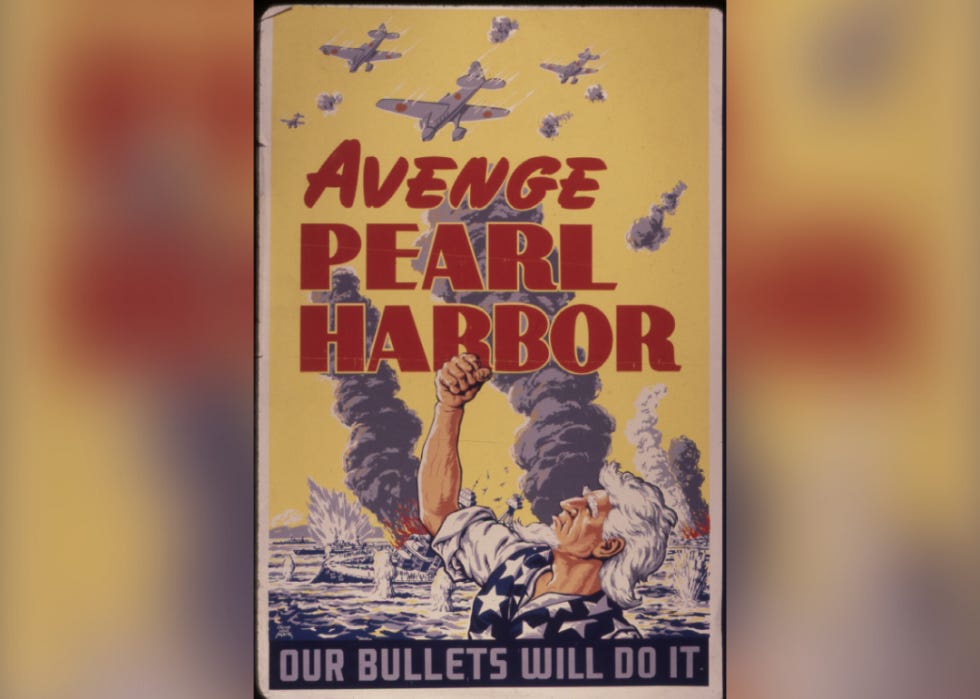
‘Avenge Pearl Harbor’

This dramatic call to arms asks Americans to take action following the Japanese attack on the U.S. Navy on December 7, 1941. With Uncle Sam raising his fist at warplanes overhead, the appeal marked a key moment in the war when Americans became motivated to spurn isolationism and join the cause.

9 / 30

David Pollack/Corbis // Getty Images

‘Defend Your Country’

Uncle Sam is rolling up his sleeves, flexing his muscles, and clenching his fist in this U.S. Army “Defend Your Country” recruitment poster. Simple and bright, it presents a sense of confidence and strength.

10 / 30

National Archives // Getty Images

‘We Can Do It’

Rosie the Riveter, declaring “We can do it!” in this poster, is one of the most recognizable U.S. icons to emerge from World War II. Yet the poster was only displayed for two weeks in Westinghouse factories. It was decades later when modern-day feminism emerged that the image enjoyed widespread popularity, showing that women could perform jobs traditionally held by men.

11 / 30

Swim Ink 2, LLC/CORBIS/Corbis // Getty Images

‘Is YOUR Trip Necessary?’

The “Is YOUR Trip Necessary?” poster of the bright-eyed, eager faces of troops gathered in front of a train was used by the U.S. government’s Office of Defense Transportation to remind civilians that the railroad was needed in the war effort. By 1943, the government restricted leisure use of automobiles and busses to conserve fuel and rubber, leaving just trains for traveling long distances. Commercial artist Montgomery Melbourne, who made the image, is credited with designing advertising images for Kool cigarettes, Morton Salt, and Wrigley’s Spearmint Gum.

12 / 30

U.S. National Archives // Wikimedia Commons

‘Keep Us Flying!’

“Keep Us Flying! Buy War Bonds” by an unidentified artist portrays Lt. Robert W. Dietz, a Tuskegee Airman. Black men who registered for the draft served in segregated units like the Tuskegee Airmen of the U.S. Army Air Corps. It was highly decorated for bravery and distinguished service.

13 / 30

Galerie Bilderwelt // Getty Images

‘This is Nazi Brutality’

The U.S. poster “This is Nazi Brutality,” showing a hooded prisoner in chains, tells the story of the Czech village of Lidice, where all the men were shot and the women and children sent to camps in retaliation for the assassination of SS officer Reinhard Heydrich. Initial German intelligence indicated the villagers had helped the resistance, but eventually, there was no evidence they were involved. The poster was created by Lithuanian-born American artist Ben Shahn, known for his portrayals of social and political topics.

14 / 30

Galerie Bilderwelt // Getty Images

Thanks for reading Capturing Voices! Subscribe for free to receive new posts and support my work.

15 iconic posters from World War II–PART 2

15 iconic posters from World War II–PART 2

8 / 30

Smith Collection/Gado/Getty Images).

Thanks for reading Capturing Voices! Subscribe for free to receive new posts and support my work.

‘Avenge Pearl Harbor’

This dramatic call to arms asks Americans to take action following the Japanese attack on the U.S. Navy on December 7, 1941. With Uncle Sam raising his fist at warplanes overhead, the appeal marked a key moment in the war when Americans became motivated to spurn isolationism and join the cause.

9 / 30

David Pollack/Corbis // Getty Images

‘Defend Your Country’

Uncle Sam is rolling up his sleeves, flexing his muscles, and clenching his fist in this U.S. Army “Defend Your Country” recruitment poster. Simple and bright, it presents a sense of confidence and strength.

10 / 30

National Archives // Getty Images

‘We Can Do It’

Rosie the Riveter, declaring “We can do it!” in this poster, is one of the most recognizable U.S. icons to emerge from World War II. Yet the poster was only displayed for two weeks in Westinghouse factories. It was decades later when modern-day feminism emerged that the image enjoyed widespread popularity, showing that women could perform jobs traditionally held by men.

11 / 30

Swim Ink 2, LLC/CORBIS/Corbis // Getty Images

‘Is YOUR Trip Necessary?’

The “Is YOUR Trip Necessary?” poster of the bright-eyed, eager faces of troops gathered in front of a train was used by the U.S. government’s Office of Defense Transportation to remind civilians that the railroad was needed in the war effort. By 1943, the government restricted leisure use of automobiles and busses to conserve fuel and rubber, leaving just trains for traveling long distances. Commercial artist Montgomery Melbourne, who made the image, is credited with designing advertising images for Kool cigarettes, Morton Salt, and Wrigley’s Spearmint Gum.

12 / 30

U.S. National Archives // Wikimedia Commons

‘Keep Us Flying!’

“Keep Us Flying! Buy War Bonds” by an unidentified artist portrays Lt. Robert W. Dietz, a Tuskegee Airman. Black men who registered for the draft served in segregated units like the Tuskegee Airmen of the U.S. Army Air Corps. It was highly decorated for bravery and distinguished service.

13 / 30

Galerie Bilderwelt // Getty Images

‘This is Nazi Brutality’

The U.S. poster “This is Nazi Brutality,” showing a hooded prisoner in chains, tells the story of the Czech village of Lidice, where all the men were shot and the women and children sent to camps in retaliation for the assassination of SS officer Reinhard Heydrich. Initial German intelligence indicated the villagers had helped the resistance, but eventually, there was no evidence they were involved. The poster was created by Lithuanian-born American artist Ben Shahn, known for his portrayals of social and political topics.

14 / 30

Galerie Bilderwelt // Getty Images

Thanks for reading Capturing Voices! Subscribe for free to receive new posts and support my work.

Digital Oral History Archivist and Archives Educator, The 1947 Partition Archive

Digital Oral History Archivist and Archives Educator, The 1947 Partition Archive

Open until filled DESCRIPTION: The 1947 Partition Archive seeks to welcome a Digital Oral History Archivist and Archives Educator to our Berkeley, California based team. This position will cater to those who are passionate about 1) archiving and preserving oral histories within analog and digital environments, 2) teaching contemporary archival techniques to a community of …

Digital Oral History Archivist and Archives Educator, The 1947 Partition Archive Read More »

15 iconic posters from World War II–PART 1

15 iconic posters from World War II–PART 1

Propaganda can be a powerful weapon, capable of arousing passions, unifying communities, stirring up fear, or changing minds in ways no bullet or bomb can do. During World War II, Allied and Axis forces used propaganda posters to spread their messages around the world.

Stacker searched Getty Archives to find 30 iconic posters from World War II that highlight their power and enduring style. They hail from the United States, Great Britain, the Soviet Union, Germany, Japan, Italy, and Vichy France. Some of the posters fueled patriotism, faith in the nation, and a belief in the righteousness of the war effort to protect national values and virtues.

Many aimed to boost morale and deliver a message of shared sacrifice. Duty meant scraping together money to invest in a United States war bond or digging a victory garden to feed the family. Every citizen had a job to do.

Thanks for reading Capturing Voices! Subscribe for free to receive new posts and support my work.

War could be glorified, with posters showing might and muscle as well as confidence and courage. Soldiers were handsome and fearless, guns were sturdy, and legions of airplanes overhead were formidable. But many were dark reminders of battlefield losses, sinister images of a lurking enemy, or the perils of careless talk or a slit of light breaching a blackout. Some reached out to particular audiences such as women, encouraging them to step out and test out new roles. Those invitations to change would mark the dawn of modern feminism. More than a few had messages that are familiar and popular today, whether they are calls to conserve fuel, travel lightly, or grow food locally on rooftops and in empty lots.

Propaganda posters from all sides were an extraordinary art form that used basic colors and simple words to reach the broadest audience.

The icons survive. Uncle Sam and Rosie the Riveter are still employed today. The works remain stirring and powerful, even as we may hope the brutality and cruelty of such a war remain a thing of the past.

1 / 30

David Pollack/Corbis // Getty Images

‘Buy More War Bonds and Stamps’

In this poster, circa 1942, a powerful fist punches through the image of a swastika, urging Americans to “buy more war bonds and stamps.” The United States issued war bonds and stamps to help finance the war effort.

2 / 30

Hulton Archive // Getty Images

‘We’re Building Things Up!’

This 1932 election poster for Germany’s Nazi Party declares, “We’re building things up!” On it, a muscular man poses against a set of stone blocks etched with the words “work,” “freedom,” and “bread.” He looks down upon two older, weaker rivals offering unemployment, corruption, lies, and more.

3 / 30

Wikimedia Commons

‘I Want You’

One of the most lasting and iconic symbols of U.S. patriotism is Uncle Sam, clad in red, white, and blue with piercing eyes and a pointing finger in this recruitment poster. James Montgomery Flagg, a magazine illustrator, used himself as the model. First produced in World War I, the poster was adapted for use in World War II.

4 / 30

SSPL/National Archives // Getty Images

‘Keep Calm and Carry On’

The slogan “Keep Calm and Carry On” was printed on posters by the British government to be distributed in the event of a German invasion. As that did not happen, the poster was never officially used in public, and following the war, copies were believed to have been destroyed in the National Salvage Campaign recycling effort. Decades later, a handful of the posters were found. Today, the saying is the basis of popular memes, from humorous to political.

5 / 30

Historica Graphica Collection/Heritage Images // Getty Images

‘Come into the Factories’

The “Come into the Factories” poster encouraged women in Britain to fill critical jobs such as manufacturing as the men went off to fight. Efforts to draw women into the war effort were often aimed at those who had never worked outside the home.

You may also like: US Army by the numbers

6 / 30

Galerie Bilderwelt //Getty Images

‘Adolf Hitler ist der Sieg!’

This German poster of the Nazi leader posed behind a chair declares, “Adolf Hitler is victory.” The portrait was created by German artist Rudolf Gerhard Zill.

7 / 30

DeAgostini // Getty Images

Japanese air force poster

Japanese war propaganda posters sought to glorify the nation’s military might. This poster of the Imperial Air Force shows countless airplanes flying over a globe decorated with Japan’s historic sun symbols.

Thanks for reading Capturing Voices! Subscribe for free to receive new posts and support my work.