Annual Meeting Author Signing Interest Call

Annual Meeting Author Signing Interest Call

Calling All Authors! The Annual Meeting will feature an Author Signing on Thursday, October 16, from 10:00 to 10:30 a.m. This special event gives selected authors the opportunity to connect with readers and showcase their work. Each participating author will be assigned table-top space to display and sell books. Please note that authors are responsible […]

More from Chicago Manual of Style’s July Q&A

More from Chicago Manual of Style’s July Q&A

Q. “. . . go to high school in Washington[, D.C.].” Is the final period necessary? Delete it? (Yes, it’s the last of a longer quotation.)

A. In your version, where you’re using brackets to supply not just the abbreviation but the comma that would normally go with it, you don’t need that final period; we can assume that your bracketed interpolation includes all sentence punctuation, including any final period. And that’s what we might expect if you were supplying the end of a sentence that’s missing or illegible in the source. In other words, your brackets restore the end of a sentence that would normally be punctuated like this:

Thanks for reading Capturing Voices! Subscribe for free to receive new posts and support my work.

“. . . go to high school in Washington, D.C.”

But if you’re simply clarifying for readers that the text is referring to the district rather than the state, don’t add that comma. Instead, put “D.C.” in brackets and add the sentence-ending period:

“. . . go to high school in Washington [D.C.].”

That extra period is needed for the same reason you’d add a period to the end of a sentence like this one (from CMOS 6.13):

His chilly demeanor gave him an affinity for the noble gases (helium, neon, etc.).

But there would be no periods in an initialism like DC in current Chicago style, so you’d normally write this:

“. . . go to high school in Washington [DC].”

See also CMOS 6.110 (which has a similar set of examples but without periods) and 12.70–74 (on editorial interpolations and clarifications).

This one has been driving me crazy!

Abbreviations

Q. Is there any chance that “am” and “pm” will become acceptable as correct forms of “a.m.” and “p.m.”?

A. There are six ways to write the abbreviations for ante meridiem (before noon) and post meridiem (after noon):

All caps with periods: 10 A.M., 10 P.M.
All caps without periods: 10 AM, 10 PM
Small caps with periods: 10 A.M., 10 P.M.
Small caps without periods: 10 AM, 10 PM
Lowercase with periods: 10 a.m., 10 p.m.
Lowercase without periods: 10 am, 10 pm

Each of these—including “am” and “pm”—is a legitimate choice. For nearly a century, Chicago’s preferred form was the third: small capital letters with periods. This preference, however, applied only to published documents (among other factors, small capitals weren’t an option on typewriters).

When we changed our preference to “a.m.” and “p.m.” (in 2003, with the publication of CMOS 15), the growth of computers in writing and publishing played a role: small caps require extra steps to apply, and they don’t always translate well across applications (when they’re even available). We could have flipped a coin and settled on all-caps “AM” and “PM” (but not “A.M.” and “P.M.”; Chicago style now omits periods in abbreviations that include two or more capital letters). When we instead chose lowercase “a.m.” and “p.m.,” we liked the fact that they’re unambiguous (“AM” and “PM” both have a number of other meanings), and we hoped the periods would help readers recognize in any context that these are abbreviations, not words.

But if you don’t like the periods, don’t fret: Merriam-Webster labels “am” and “pm” as British variants, so you’re hardly alone in your preference. If you’re being published, however, be prepared to defer to your publisher’s house style, whatever that may be.

Thanks for reading Capturing Voices! Subscribe for free to receive new posts and support my work.

The Conscious Style Guide

love@consciousstyleguide.com

Read Online

A Note From the Founder

I’m bothered by the lack of distinction between generative AI and non-generative AI (also called traditional machine learning, traditional AI, analytical AI) in nearly all AI coverage and commentary.

Thanks for reading Capturing Voices! Subscribe for free to receive new posts and support my work.

Collapsing different types of AI into one term, “AI,” promotes confusion and misinformation about what we really need to pay attention to and be concerned about. When products, for example, are described as “using AI” or “having AI,” it tells me nothing about what is actually being used or whether there are ethical issues involved, e.g., theft of creators’ works by gen AI.

Continue reading on LinkedIn >

Tech industry tried reducing AI’s pervasive bias. Now Trump wants to end its ‘woke AI’ efforts

Tech industry tried reducing AI’s pervasive bias. Now Trump wants to end its ‘woke AI’ efforts

Trump-aligned lawmakers are pushing AI companies to abandon “woke AI” efforts like fairness, safety, and bias mitigation—branding them as ideological overreach. But here’s the danger: that erases vital protections for racial, gender, and LGBTQ+ communities.

When fairness becomes “woke”—what happens to marginalized voices? Human-led, bias-aware language services are crucial when tech is being politically optimized.

Thanks for reading Capturing Voices! Subscribe for free to receive new posts and support my work.

By MATT O’BRIEN

Updated 7:00 AM GMT-3, April 27, 2025

CAMBRIDGE, Mass. (AP) — After retreating from their workplace diversity, equity and inclusion programs, tech companies could now face a second reckoning over their DEI work in AI products.

In the White House and the Republican-led Congress, “woke AI” has replaced harmful algorithmic discrimination as a problem that needs fixing. Past efforts to “advance equity” in AI development and curb the production of “harmful and biased outputs” are a target of investigation, according to subpoenas sent to Amazon, Google, Meta, Microsoft, OpenAI and 10 other tech companies last month by the House Judiciary Committee.

And the standard-setting branch of the U.S. Commerce Department has deleted mentions of AI fairness, safety and “responsible AI” in its appeal for collaboration with outside researchers. It is instead instructing scientists to focus on “reducing ideological bias” in a way that will “enable human flourishing and economic competitiveness,” according to a copy of the document obtained by The Associated Press.

In some ways, tech workers are used to a whiplash of Washington-driven priorities affecting their work.

But the latest shift has raised concerns among experts in the field, including Harvard University sociologist Ellis Monk, who several years ago was approached by Google to help make its AI products more inclusive.

Back then, the tech industry already knew it had a problem with the branch of AI that trains machines to “see” and understand images. Computer vision held great commercial promise but echoed the historical biases found in earlier camera technologies that portrayed Black and brown people in an unflattering light.

“Black people or darker skinned people would come in the picture and we’d look ridiculous sometimes,” said Monk, a scholar of colorism, a form of discrimination based on people’s skin tones and other features.

Google adopted a color scale invented by Monk that improved how its AI image tools portray the diversity of human skin tones, replacing a decades-old standard originally designed for doctors treating white dermatology patients.

“Consumers definitely had a huge positive response to the changes,” he said.

Now Monk wonders whether such efforts will continue in the future. While he doesn’t believe that his Monk Skin Tone Scale is threatened because it’s already baked into dozens of products at Google and elsewhere — including camera phones, video games, AI image generators — he and other researchers worry that the new mood is chilling future initiatives and funding to make technology work better for everyone.

“Google wants their products to work for everybody, in India, China, Africa, et cetera. That part is kind of DEI-immune,” Monk said. “But could future funding for those kinds of projects be lowered? Absolutely, when the political mood shifts and when there’s a lot of pressure to get to market very quickly.”

Trump has cut hundreds of science, technology and health funding grants touching on DEI themes, but its influence on commercial development of chatbots and other AI products is more indirect. In investigating AI companies, Republican Rep. Jim Jordan, chair of the judiciary committee, said he wants to find out whether former President Joe Biden’s administration “coerced or colluded with” them to censor lawful speech.

Michael Kratsios, director of the White House’s Office of Science and Technology Policy, said at a Texas event this month that Biden’s AI policies were “promoting social divisions and redistribution in the name of equity.”

The Trump administration declined to make Kratsios available for an interview but quoted several examples of what he meant. One was a line from a Biden-era AI research strategy that said: “Without proper controls, AI systems can amplify, perpetuate, or exacerbate inequitable or undesirable outcomes for individuals and communities.”

Even before Biden took office, a growing body of research and personal anecdotes was attracting attention to the harms of AI bias.

One study showed self-driving car technology has a hard time detecting darker-skinned pedestrians, putting them in greater danger of getting run over. Another study asking popular AI text-to-image generators to make a picture of a surgeon found they produced a white man about 98% percent of the time, far higher than the real proportions even in a heavily male-dominated field.

Face-matching software for unlocking phones misidentified Asian faces. Police in U.S. cities wrongfully arrested Black men based on false face recognition matches. And a decade ago, Google’s own photos app sorted a picture of two Black people into a category labeled as “gorillas.”

Even government scientists in the first Trump administration concluded in 2019 that facial recognition technology was performing unevenly based on race, gender or age.

Biden’s election propelled some tech companies to accelerate their focus on AI fairness. The 2022 arrival of OpenAI’s ChatGPT added new priorities, sparking a commercial boom in new AI applications for composing documents and generating images, pressuring companies like Google to ease its caution and catch up.

Then came Google’s Gemini AI chatbot — and a flawed product rollout last year that would make it the symbol of “woke AI” that conservatives hoped to unravel. Left to their own devices, AI tools that generate images from a written prompt are prone to perpetuating the stereotypes accumulated from all the visual data they were trained on.

Google’s was no different, and when asked to depict people in various professions, it was more likely to favor lighter-skinned faces and men, and, when women were chosen, younger women, according to the company’s own public research.

Google tried to place technical guardrails to reduce those disparities before rolling out Gemini’s AI image generator just over a year ago. It ended up overcompensating for the bias, placing people of color and women in inaccurate historical settings, such as answering a request for American founding fathers with images of men in 18th century attire who appeared to be Black, Asian and Native American. Google quickly apologized and temporarily pulled the plug on the feature, but the outrage became a rallying cry taken up by the political right.

With Google CEO Sundar Pichai sitting nearby, Vice President JD Vance used an AI summit in Paris in February to decry the advancement of “downright ahistorical social agendas through AI,” naming the moment when Google’s AI image generator was “trying to tell us that George Washington was Black, or that America’s doughboys in World War I were, in fact, women.”

“We have to remember the lessons from that ridiculous moment,” Vance declared at the gathering. “And what we take from it is that the Trump administration will ensure that AI systems developed in America are free from ideological bias and never restrict our citizens’ right to free speech.”

A former Biden science adviser who attended that speech, Alondra Nelson, said the Trump administration’s new focus on AI’s “ideological bias” is in some ways a recognition of years of work to address algorithmic bias that can affect housing, mortgages, health care and other aspects of people’s lives.

“Fundamentally, to say that AI systems are ideologically biased is to say that you identify, recognize and are concerned about the problem of algorithmic bias, which is the problem that many of us have been worried about for a long time,” said Nelson, the former acting director of the White House’s Office of Science and Technology Policy who co-authored a set of principles to protect civil rights and civil liberties in AI applications.

But Nelson doesn’t see much room for collaboration amid the denigration of equitable AI initiatives.

“I think in this political space, unfortunately, that is quite unlikely,” she said. “Problems that have been differently named — algorithmic discrimination or algorithmic bias on the one hand, and ideological bias on the other —- will be regrettably seen us as two different problems.”


Thanks for reading Capturing Voices! Subscribe for free to receive new posts and support my work.

When Hyphenation Is Unnecessary

Chicago Manual / October 10, 2023 Updated August 12, 2025

Spotlight on CMOS 7.90 and 7.91

One of the main reasons to insert a hyphen between two words that aren’t normally hyphenated is to help readers sort out the text when those words are used as a compound modifier before a noun. For example, an apartment on the ninth floor of a building is a ninth-floor apartment; the added hyphen makes it immediately clear that ninth-floor is a single compound that modifies apartment.

Thanks for reading Capturing Voices! Subscribe for free to receive new posts and support my work.

Such hyphens make reading a little easier, but they also add a tiny bit of clutter to the page or screen. When comprehension isn’t threatened, they can often be left out.

The Case of the ‑ly Adverb

The classic example of when not to hyphenate a compound modifier involves ‑ly adverbs, like beautifully in the phrase beautifully behaved dog. The logic is that because beautifully is an adverb—and obviously so, thanks to that ‑ly ending—readers won’t need any help figuring out what modifies what.

There’s no such thing as a beautifully dog, not to mention a behaved dog that’s beautifully. So there’s no chance of a misreading.

This logic works well with Chicago style, which favors a “spare” approach to hyphenation, as described in the intro to the hyphenation table at CMOS 7.96. The gist of this approach is that when neither the dictionary nor the hyphenation table provides an answer, a hyphen should be added to a compound that doesn’t normally include one “only if doing so will prevent a misreading or otherwise significantly aid comprehension.”

In an earlier and somewhat more elaborately punctuated age, however, compound modifiers formed with ‑ly adverbs tended to get hyphens, as the following examples demonstrate:

In spite of her deeply-rooted dislike, she could not be insensible to the compliment of such a man’s affection. (Jane Austen, Pride and Prejudice, vol. 2 [London, 1813], 124)

. . . namely, the highly-prized spermaceti, in its absolutely pure, limpid, and odoriferous state. (Herman Melville, Moby-Dick; or, The Whale [New York, 1851], 378)

Her discretions interested him almost as much as her imprudences: he was so sure that both were part of the same carefully-elaborated plan. (Edith Wharton, The House of Mirth [New York, 1905], 6)

The point of resurrecting those dusty old examples is to show that adding a hyphen to an ‑ly compound isn’t the worst idea. Those words, after all, belong together.

But the earliest edition of CMOS, published one year after The House of Mirth first appeared, ruled against such hyphens (see 1st ed. [1906], ¶ 167). And according to the latest edition of CMOS and many other modern guides, even the most meticulously edited text can do without them (see CMOS 7.93).

Established Open Compounds

Extending the example of ‑ly compounds, a hyphen can often be omitted from other types of compounds that present no risk of a misreading. For instance, the unhyphenated examples in CMOS 7.90public welfare administration and graduate student housing—are perfectly clear as written.

That’s at least partly because both “public welfare” and “graduate student” are familiar as open compounds—​especially in the context of administration and housing. It wouldn’t be wrong to add a hyphen to either of those compound terms, but it’s unnecessary (see CMOS 7.91).

If you’re faced with a compound modifier that seems to work just as well without a hyphen as with, but you’re not quite sure, check the dictionary. If the term is listed there as an open compound, the hyphen can probably be left out; otherwise, go ahead and add one.

For example, the phrase high school diploma (no hyphen) seems just as clear as high-school diploma (hyphen); not only is high school diploma a familiar phrase, but you’d have to make an effort to misread it. And the term high school is listed in Merriam-Webster as an unhyphenated noun, so in this case the hyphen can be left out. If you need more evidence than that, Merriam-Webster also includes an entry for high school reunion—no hyphen.

In less clear-cut cases, a hyphen will usually be the better choice. For example, the compound high drama is entered as a noun in Merriam-Webster, but that term isn’t all that common as a modifier. So a phrase like high-drama situation is best hyphenated in accordance with CMOS 7.96, section 2, under “adjective + noun.” And in some cases, dictionaries will list a hyphenated adjective form—as with high fidelity (n.), high-fidelity (adj.).

How Small Is That Animal Hospital?

Sometimes a hyphen in a compound modifier does more than simply make reading a little easier—it provides essential information. Take the example of a small-animal hospital. Without a hyphen, the phrase might easily refer to a small hospital for animals. With a hyphen, the phrase clearly refers to a hospital for small animals.

And that’s what we’d recommend—in general contexts (see also CMOS 5.96).

But let’s say you’re writing or editing an article for The Veterinary Journal, a peer-reviewed scientific journal established in 1875. Here are a few excerpts from “Effect of Attire on Client Perceptions of Veterinarians,” by E. Bentley, H. Kellihan, C. Longhurst, and R. Chun, from volume 265 (2020):

Clients volunteered to answer a survey in the small animal waiting area over a 3-month period.

Only three studies have examined veterinarian attire and client perceptions in veterinary medicine. In the first, 154 clients of a 24-h small animal emergency clinic were surveyed about their preferences of dress for veterinarians in a variety of situations.

Respondents were recruited by signs placed in the University of Wisconsin Veterinary Care (UW Veterinary Care) small animal hospital waiting area.

The Veterinary Journal isn’t averse to hyphens, as this sentence from the same article’s introduction shows (not to mention the modifiers “3-month” and “24-h” in the examples above):

The purpose of this study was to do a large-scale survey of the clientele of an academic teaching hospital to determine the influence of attire on client perceptions of veterinarian competence and comfort with veterinarians.

The point is that in this journal—one in which “small animal” is a frequently used phrase that has a specialized meaning (think cats, dogs, hamsters, etc.)—the hyphen simply isn’t considered necessary. Everyone—meaning anyone who would read something in a veterinary journal (and not only those who are members of the British Small Animal Veterinary Association)—knows what “small animal hospital” (or clinic or whatever) means.

But in more general contexts, a hyphen is more likely to be used, as in the journal PET Clinics. (Note that PET stands for “positron emission tomography”—an imaging technology that can be used on both humans and animals. The acronym doesn’t have anything to do with pets.)

In the 2020 article “Advances in Preclinical PET Instrumentation,” by Mahsa Amirrashedi, Habib Zaidi, and Mohammad Reza Ay, which investigates the use of PET scanners on small animals, the phrase “small animal” is hyphenated as needed:

Salient progress and considerable advances in small-animal PET imaging has had and will continue to have a far more profound effect on drug development and biomedical research.

The IRIS PET from Inviscan (Strasbourg, France) represents the latest generation of commercial small-animal scanners operating either in rotating or stationary modes.

The other key factor that should be taken into account when devising a small-animal scanner is the shape of the detector arrangements.

Those hyphens help readers who aren’t necessarily immersed in the world of small-animal care understand that we’re talking about small animals, not small scanners.

Takeaway

When in doubt about whether you should add a hyphen to a particular compound modifier before a noun, lean toward hyphenation, which is almost never wrong. But to avoid cluttering your documents with unnecessary hyphens, consider what works best in any given context—while also consulting the hyphenation guide in CMOS and the dictionary entries from Merriam-Webster.

Any small animals in your life probably won’t appreciate your attention to detail, but human readers just might.

Thanks for reading Capturing Voices! Subscribe for free to receive new posts and support my work.

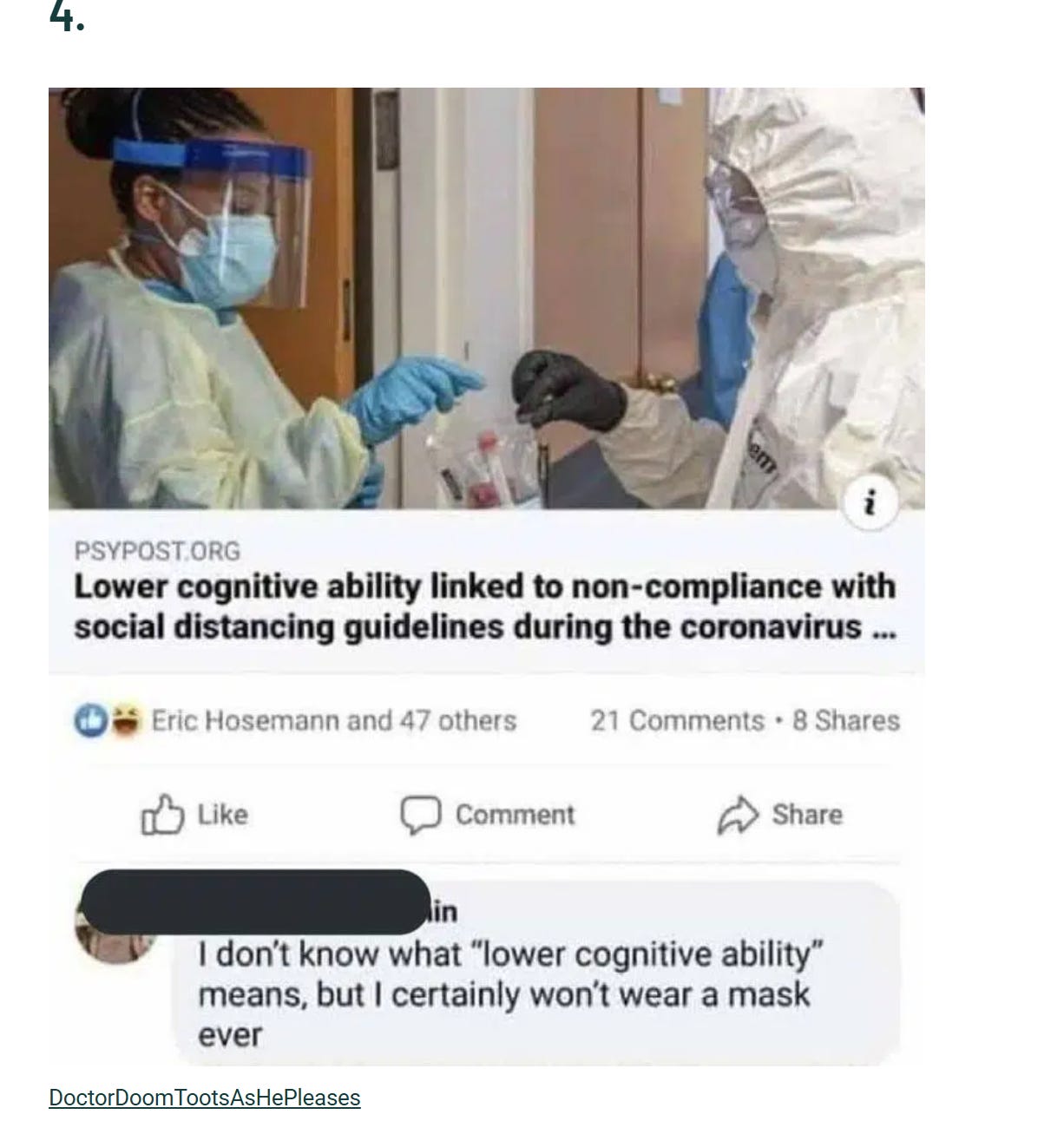
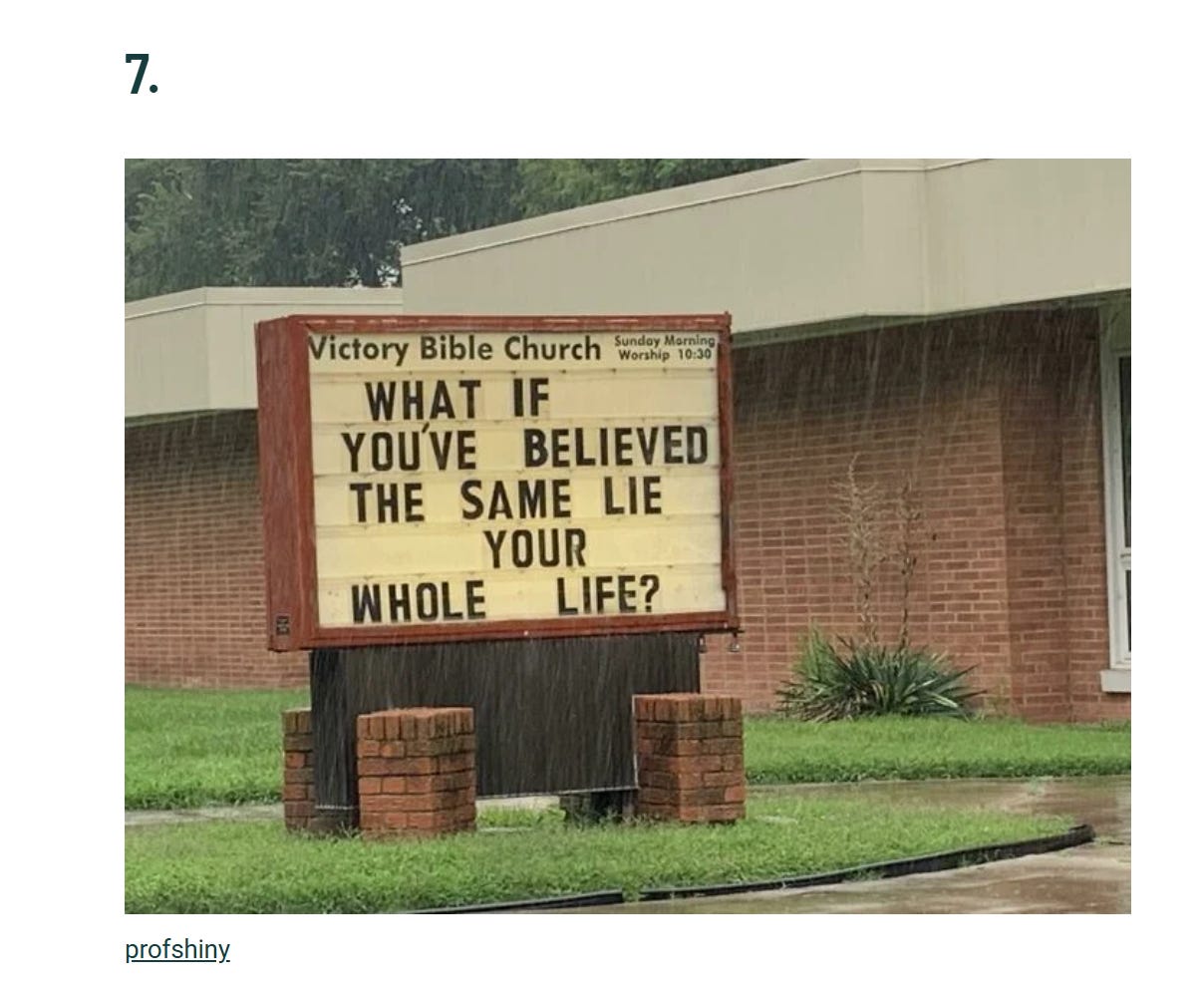
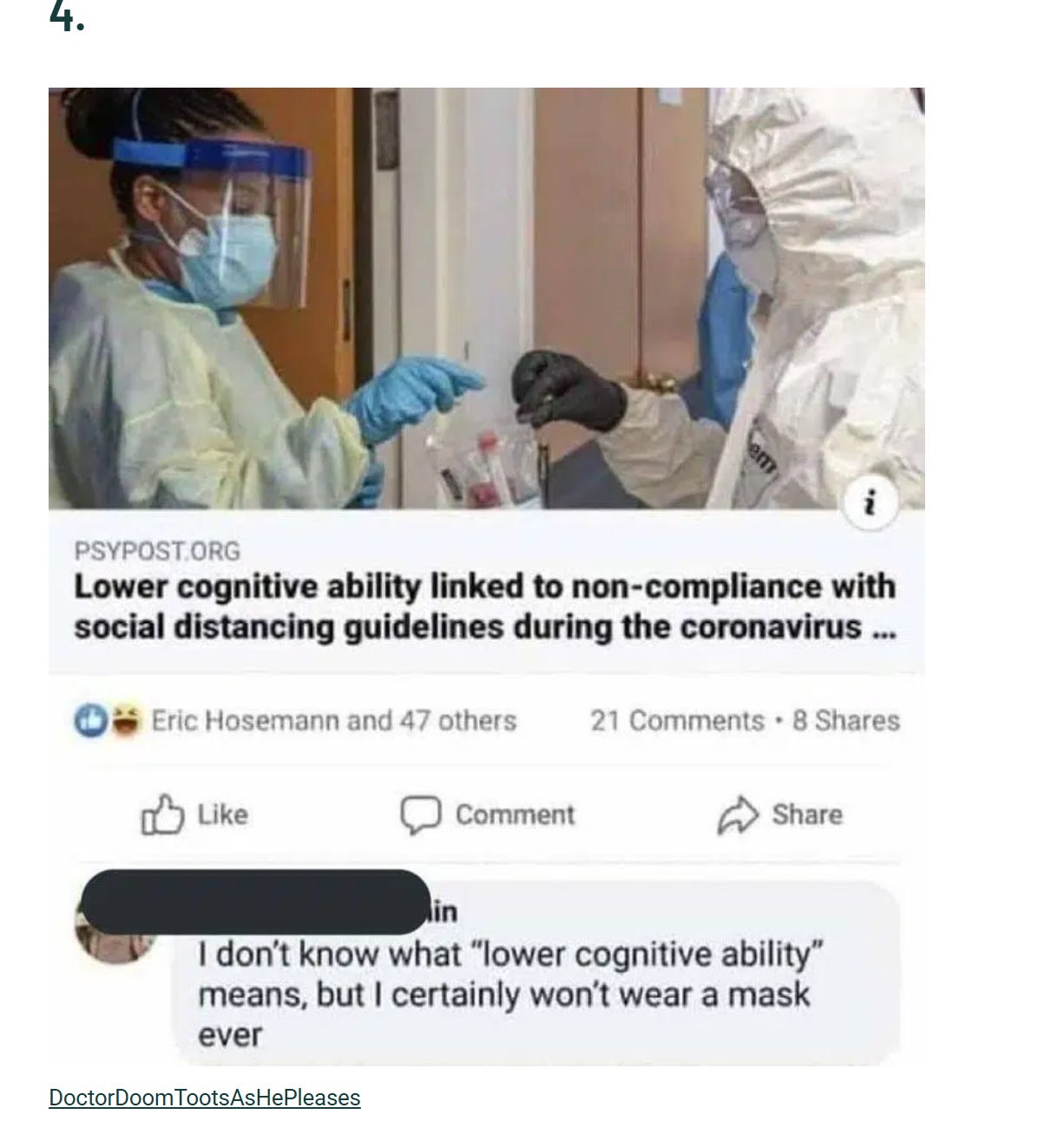
Accidentally Ironic Images That Show the Universe Has A Weird Sense of Humor.

From the WONDERFUL Language Nerds https://thelanguagenerds.com/2025/ironic-images/

What makes these ironic images especially amusing is the contrast between intention and outcome. A fire safety sign next to a burning building, a “no littering” poster surrounded by trash, or a motivational quote in the most demotivating context—these visuals speak volumes without needing explanation. They highlight the gap between what should be and what actually is, and that unexpected gap is where irony thrives. It’s this disconnect that tickles our sense of humor and makes us pause, laugh, and shake our heads at life’s strange little contradictions.

Thanks for reading Capturing Voices! Subscribe for free to receive new posts and support my work.

Thanks for reading Capturing Voices! Subscribe for free to receive new posts and support my work.