In this clear and accessible explainer for The Conversation, clinical academic Joshua Winowiecki breaks down the peer review process — where anonymous experts evaluate research for quality, rigor, and clarity. While not without flaws, peer review remains a cornerstone of academic credibility. A useful primer for anyone navigating scientific literature, whether in healthcare, education, or beyond.
Reviewer 1: “This manuscript is a timely and important contribution to the field, with clear methodology and compelling results. I recommend publication with only minor revisions.”
Reviewer 2: “This manuscript is deeply flawed. The authors’ conclusions are not supported by data, and key literature is ignored. Major revisions are required before it can be considered.”
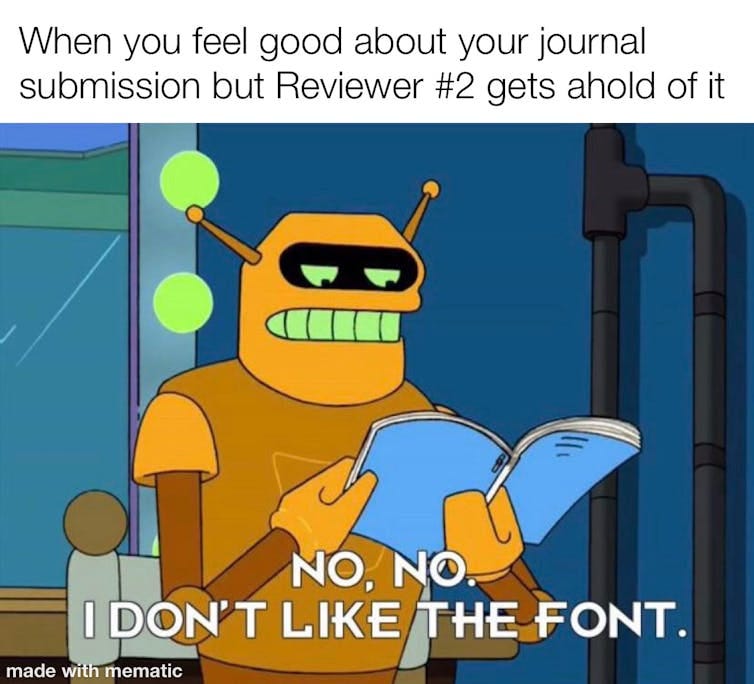
These lines could be pulled from almost any editorial decision letter in the world of academic publishing, sent from a journal to a researcher. One review praises the work, while another sees nothing but problems. For scholars, this kind of contradiction is common. Reviewer 2, in particular, has become something of a meme: an anonymous figure often blamed for delays, rejections or cryptic critiques that seem to miss the point.
But those disagreements are part of the peer-review process.
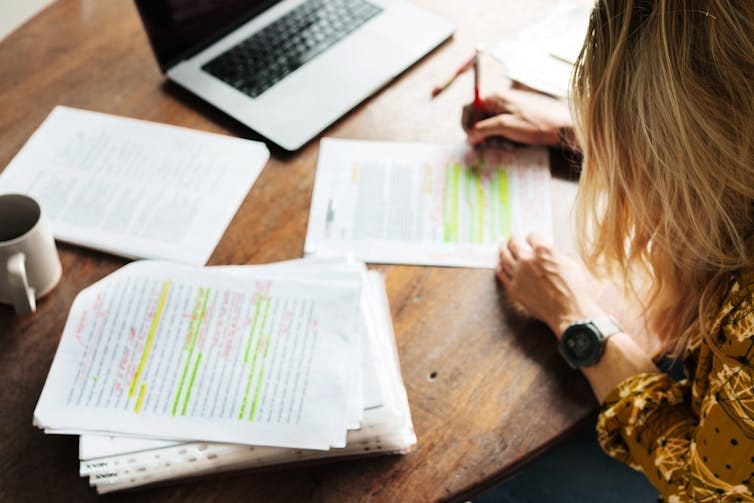
As a clinical nurse specialist, educator and scholar who reviews studies in nursing and health care and teaches others to do so critically as well, I’ve seen how peer review shapes not just what gets published, but what ultimately influences practice.
Peer review is the checkpoint where scientific claims are validated before they are shared with the world. Researchers and scholars submit their findings to academic journals, which invite other scholars with similar expertise – those are the peers – to assess the work. Reviewers look at the way the scholar designed the project, the methods they used and whether their conclusions stand up.
The point of peer review
This process isn’t new. Versions of peer review have been around for centuries. But the modern form – anonymous, structured and managed by journal editors – took hold after World War II. Today, it is central to how scientific publishing works, and nowhere more so than health, nursing and medicine. Research that survives review is more likely to be trusted and acted upon by health care practitioners and their patients.
Millions of research papers move through this process annually, and the number grows every year. The sheer volume means that peer review isn’t just quality control, it’s become a bottleneck, a filter of sorts, and a kind of collective judgment about what counts as credible.
In clinical fields, peer review also has a protective role. Before a study about a new medication, procedure or care model gains traction, it is typically evaluated by others in the field. The point isn’t to punish the authors – it’s to slow things down just enough to critically evaluate the work, catch mistakes, question assumptions and raise red flags. The reviewer’s work doesn’t always get credit, but it often changes what ends up in print.
So, even if you’ve never submitted a paper or read a scientific journal, peer-reviewed science still shows up in your life. It helps shape what treatments are available, what protocols and guidelines your nurse practitioner or physician uses, and what public health advice gets passed along on the news.
This doesn’t mean peer review always works. Plenty of papers get published despite serious limitations. And some of these flawed studies do real harm. But even scholars who complain about the system often still believe in it. In one international survey of medical researchers, a clear majority said they trusted peer-reviewed science, despite frustrations with how slow or inconsistent the process can be.
What actually happens when a paper is reviewed?
Before a manuscript lands in the hands of reviewers, it begins with the researchers themselves. Scientists investigate a question, gather and analyze their data and write up their findings, often with a particular journal in mind that publishes new work in their discipline. Once they submit their paper to the journal, the editorial process begins.
At this point, journal editors send it out to two or three reviewers who have relevant expertise. Reviewers read for clarity, accuracy, originality and usefulness. They offer comments about what’s missing, what needs to be explained more carefully, and whether the findings seem valid. Sometimes the feedback is collegial and helpful. Sometimes it’s not.
Here is where Reviewer 2 enters the lore of academic life. This is the critic who seems especially hard to please, who misreads the argument, or demands rewrites that would reshape the entire project. But even these kinds of reviews serve a purpose. They show how work might be received more broadly. And many times they flag weaknesses the author hadn’t seen.
Review is slow. Most reviewers aren’t paid, with nearly 75% reporting they receive no compensation or formal recognition for their efforts. They do this work on top of their regular clinical, teaching or research responsibilities. And not every editor has the time or capacity to sort through conflicting feedback or to moderate tone. The result is a process that can feel uneven, opaque, and, at times, unfair.
It doesn’t always catch what it is supposed to. Peer review is better at catching sloppy thinking than it is at detecting fraud. If data is fabricated or manipulated, a reviewer may not have the tools, or the time, to figure that out. In recent years, a growing number of published papers have been retracted after concerns about plagiarism or faked results. That trend has shaken confidence in the system and raised questions about what more journals should be doing before publication.
Imperfect but indispensable
Even though the current peer-review system has its shortcomings, most researchers would argue that science is better off than it would be without the level of scrutiny peer review provides. The challenge now is how to make peer review better.
Some journals are experimenting with publishing reviewer comments alongside articles. Other are trying systems where feedback continues after publication. There are also proposals to use artificial intelligence to help flag inconsistencies or potential errors before human reviewers even begin.
These efforts are promising but still in the early stages of development and adoption. For most fields, peer review remains a basic requirement for legitimacy, while some, such as law and high-energy physics, have alternate methods of communicating their findings. Peer review assures a reader that a journal article’s claim has been tested, scrutinized and revised.
Peer review doesn’t guarantee truth. But it does invite challenge, foster transparency, offer reflection and force revision. That’s often where the real work of science begins.
Even if Reviewer 2 still has notes.