Is “Is” Always Capitalized in Titles?

Chicago Manual / August 24, 2021 Updated August 12, 2025
CMOS 8.160 in the Spotlight

A key feature of any style is how it capitalizes words in the titles of books, articles, and other works. Most recommend a variation of title case, or what CMOS until very recently referred to as headline style (before the publication of the 18th edition).

And though there are some differences among the major styles—for example, AP and APA capitalize prepositions of four letters or more in a title, whereas for Chicago it’s now five or more—they all specify an initial capital for verbs, regardless of length.

This includes the word “is,” as in the song title “Breaking Up Is Hard to Do” (Neil Sedaka and Howard Greenfield, 1962).* When such a title is mentioned in ordinary text or in a source citation, there are generally no exceptions (see CMOS 13.89). But there are some nuances to consider, including some graphical contexts where it may be appropriate to leave “is” lowercase.

“Is” in Title Case

“Is” is a mere linking verb, the textual equivalent of an equals sign—and it’s only two letters long. So it’s an easy word to forget to capitalize.

Nor does “is” appear all that frequently in titles, considering its ubiquity in ordinary prose. When it is used, it’s sometimes contracted, which is a good way of minimizing its impact. Take the title of the iconic movie It’s a Wonderful Life (1946). Without the contraction, and particularly with a capital I, the emphasis would shift toward the verb: It Is a Wonderful Life.

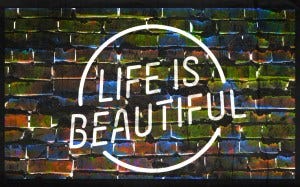
“Is” is spelled out in the title of the 1997 movie Life Is Beautiful (a translation from the original Italian), so it gets a capital I in Chicago style. But the word is de-emphasized in the poster art for the theatrical release. Notice how the movie’s title is in caps and small caps except for the word “is,” which is in all small caps—and in a smaller font than any of the other letters in the title:
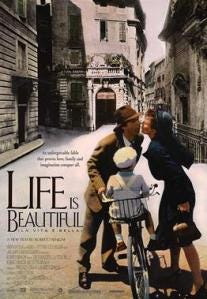
That works well: “Life” and “Beautiful” are the words that matter most.

Thanks for reading Capturing Voices! Subscribe for free to receive new posts and support my work.

Consider also the cover for Sue Grafton’s novel Y Is for Yesterday (G. P. Putnam’s Sons, 2017):**
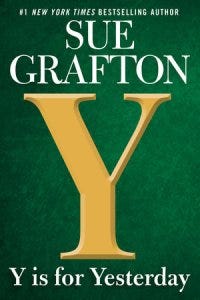
The connecting words “is” and “for” are both lowercase, which allows the more important elements in the title (namely the Y’s) to stand out. (The preposition “for” would be lowercase in Chicago and most other styles.) In Grafton’s title—as in each of the titles mentioned in this post—“is” plays more of a supporting than a leading role.

A lowercase “is” like the one on the Grafton cover, where the small i alone signals that the word is unimportant, would be unlikely to make it past Chicago’s editorial team. But our publications tend to be scholarly in nature; in fiction and other creative contexts, rules are made to be broken.

What’s the Verdict?

“Is” is a verb, so unless it’s hiding behind a contraction, it should always be capitalized in titles mentioned in the text or in a Chicago-style source citation. But it’s a humble little word that doesn’t always like to stand out. In a graphical setting like a book cover or a movie poster, bigger isn’t necessarily better.


* Note that “Up” is an adverb, not a preposition, in the title phrase “Breaking Up”—and therefore capitalized (see also CMOS 8.160, rule 3).

The subheads in this post are in title case, but sentence case is also an option for subheads, provided it’s consistently applied across a document (see CMOS 2.22 and 8.159).

Wikipedia’s entry for Life Is Beautiful, as of August 23, 2021 (the day before this post was originally published), mentioned or cited that title twenty-eight times (up to and including the bibliography); in thirteen of those instances—or nearly half—the word “is” was spelled with a small i. Apparently, it’s natural to want to lowercase “is” in a title. (As of July 27, 2025, most of these had been fixed.) Such inconsistency isn’t a problem with the Italian title—La vita è bella—where sentence case (and, by extension, lowercase for è, “is”) is the norm (see CMOS 11.8).

** According to CMOS 7.67, letters used as letters are normally italicized (as when mentioned in text). Ditto for “Yesterday,” a word used as a word—which, according to CMOS 7.66, would normally be set in either italics or quotation marks. In an italic title, however, these distinctions are unnecessary (see CMOS 8.175).

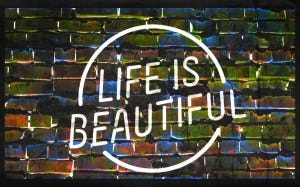
Top image: Life Is Beautiful, by Linnaea Mallette (public domain).
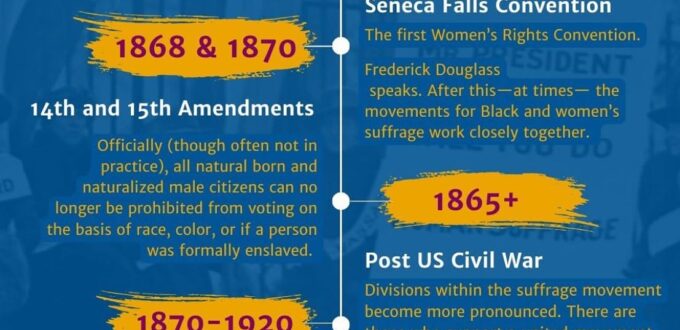
WOMEN’S RIGHT TO VOTE League of Women Voters of Kittitas County

Posted @withregram • @lwvbellinghamwhatcom

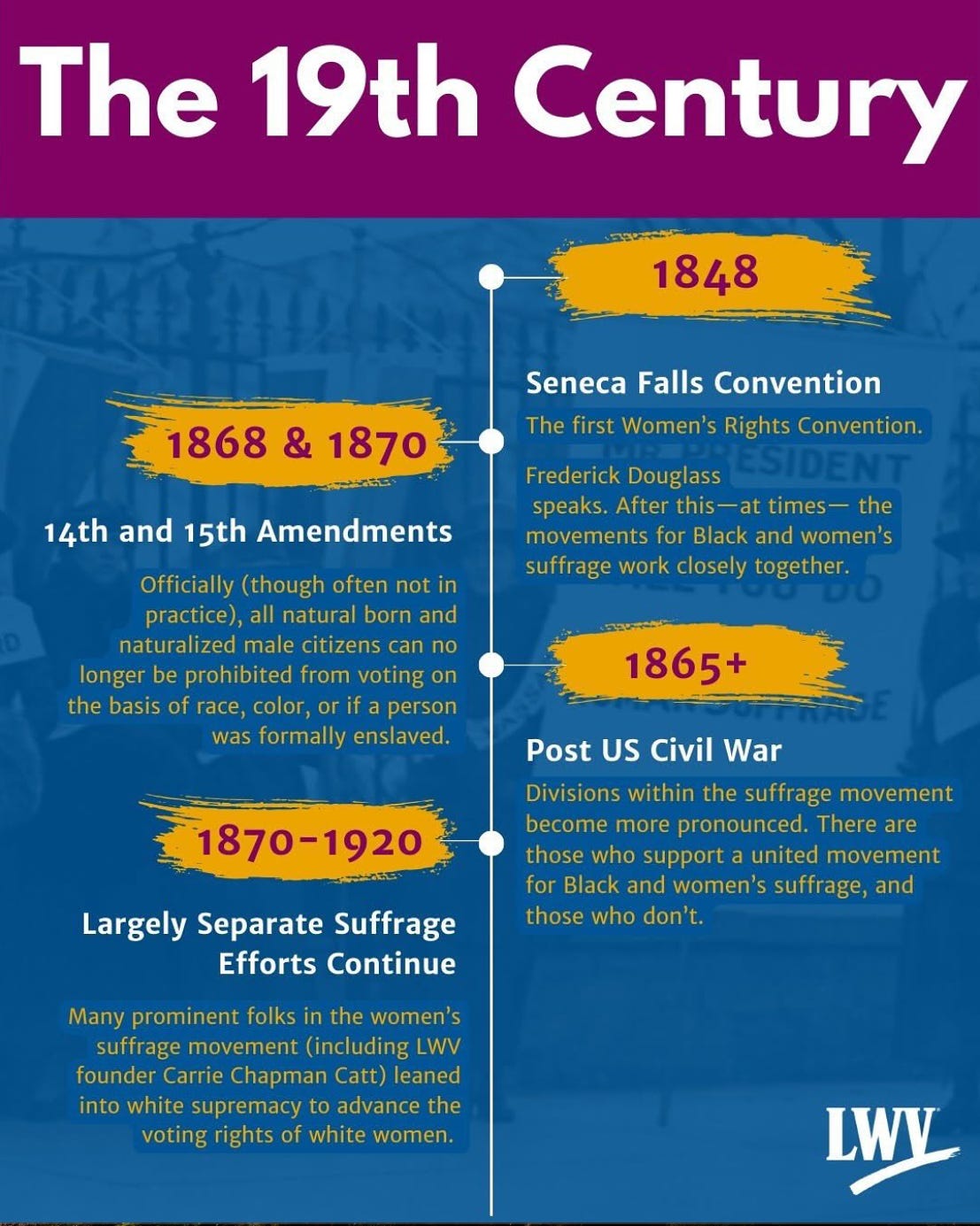
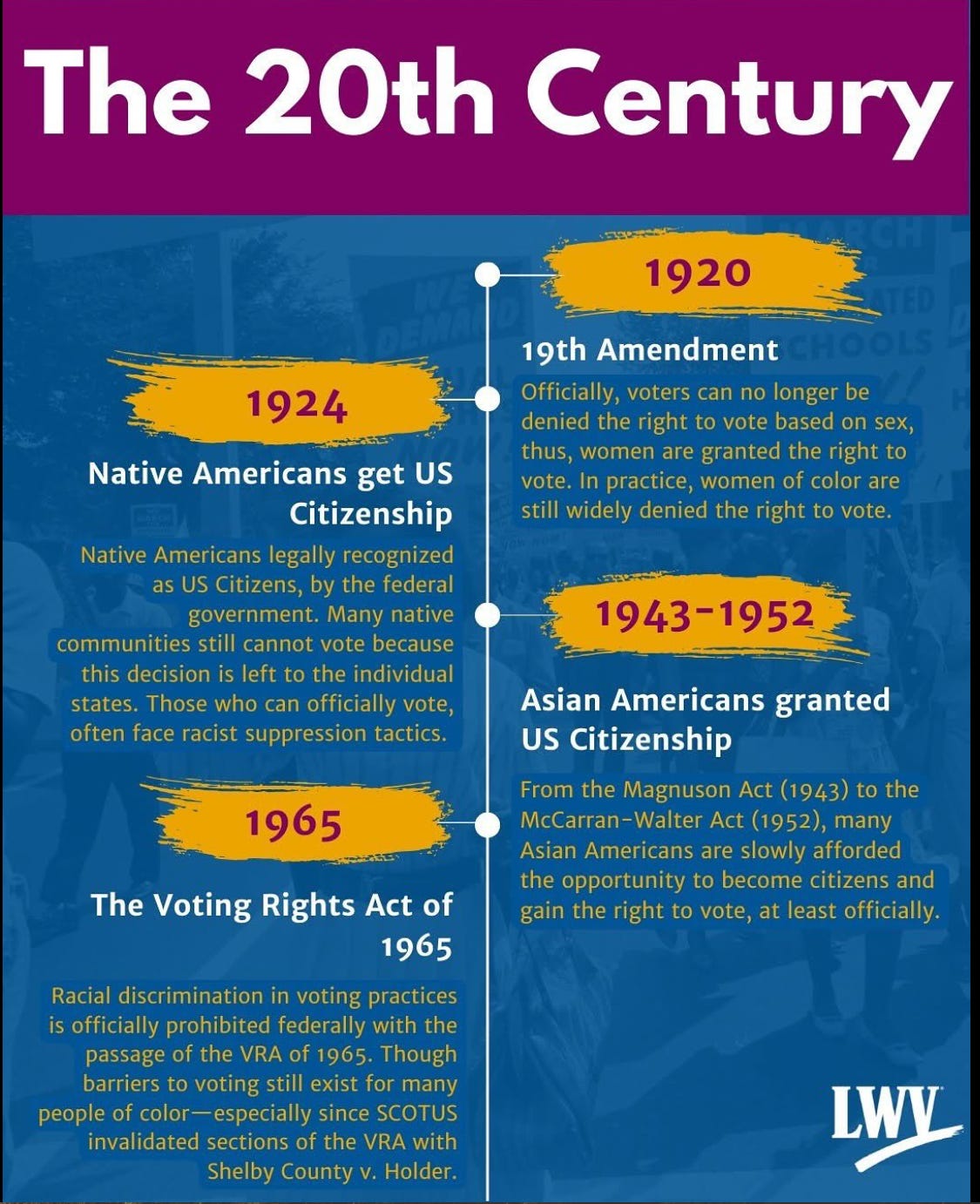
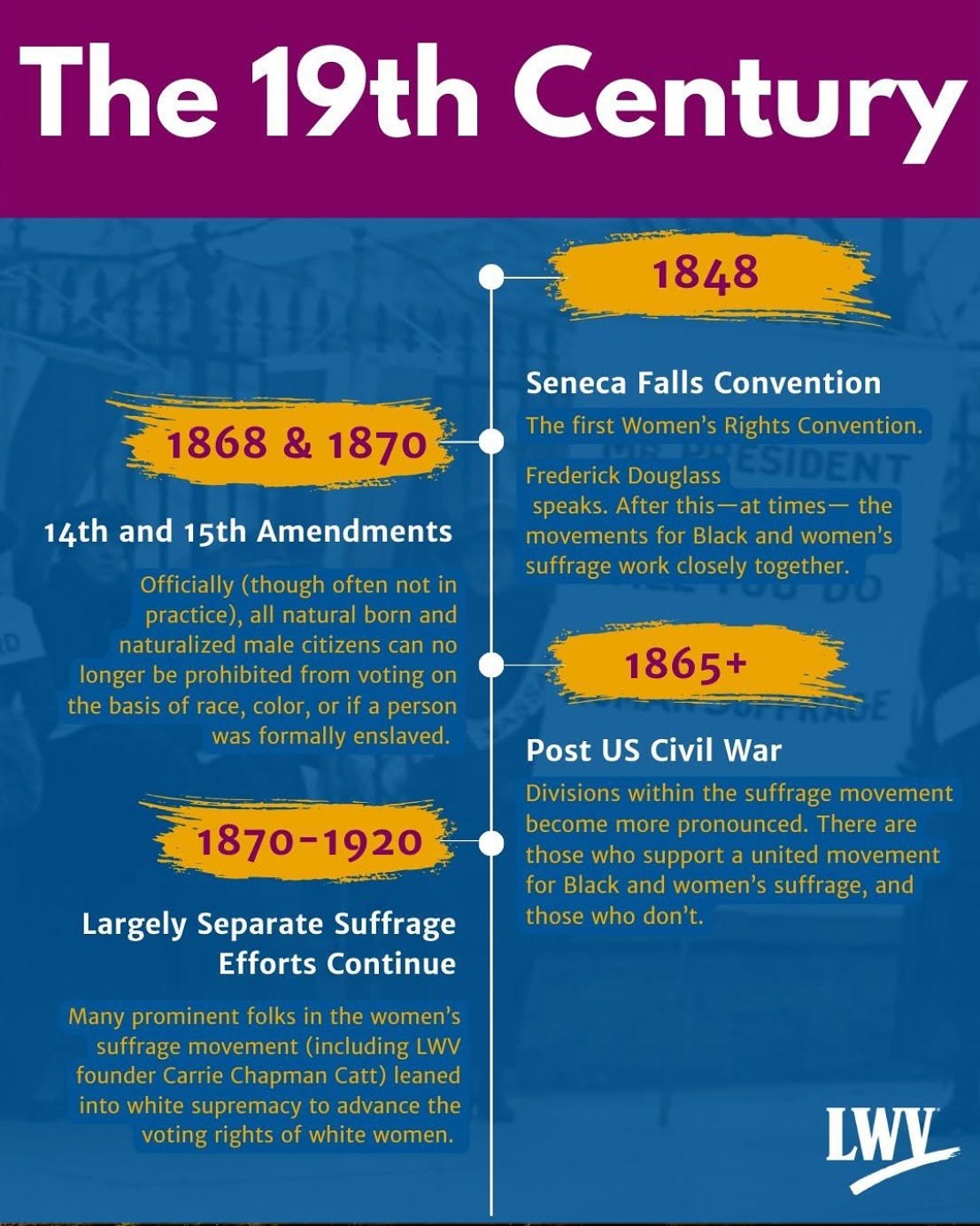
We often hear that women gained the right to vote with the ratification of the 19th Amendment to the US Constitution on August 18, 1920—and that’s true, but functionally this new right to vote largely only applied to white women.

Women of color fought just as long and hard for the right to vote, and had to keep fighting after the passage of the 19th Amendment. Many STILL face barriers to the ballot box today and have continued to fight for their right to vote.

Swipe through (or head to the alt-text) to see a more inclusive timeline of women’s right to vote.

Thanks for reading Capturing Voices! Subscribe for free to receive new posts and support my work.

Ask Mister Language Person

You’ll be sorry. Dave Barry Aug 15, 2025

Today, we are pleased to announce the return of Mister Language Person, the only leading grammar authority to have been recognized by both Walmart and the American Society of English Teachers on Drugs.

We’re bringing Mister Language Person out of retirement because this nation is in the midst of a serious literacy crisis. How serious is it? Consider this alarming statistic: When 5,000 U.S. high-school students recently took a standardized test measuring their knowledge of basic English grammar, nobody could figure out how to score it, because we also have a math crisis. But it was probably pretty bad.

We say this because every day we see signs of the steep decline in our national language skills: Terrible grammar, run-on sentences, misspellings, insanely random capitalization… and that’s just from the president! Click listen now for sound effect.

Listen now · 0:01

But seriously, it’s bad. Which is why we, as a nation, are fortunate to have an authority as authoritative as Mister Language Person on hand to enlighten us by answering the following common grammar and usage questions, all of which were submitted by actual Substack readers just like you except that they are imaginary.

Our first common question is one that we get literally a billion times a day:

Q. What does “literally” mean?

A. In grammatical terms, “literally” is an interjunctive superlatory, and as such it is used to denote that something literal has transpired, as in this example:

Doreen was literally decimated when Roger broke wind during their vows.

Thanks for reading Capturing Voices! Subscribe for free to receive new posts and support my work.

Q. In the song “Mister Bojangles” by the late, great Jerry Jeff Walker, the lyrics to verse four state, quote: “The dog up and died.” Does that mean the dog did two separate things? That is, did the dog up, and then die? In which case shouldn’t it be “The dog upped and died?”

A. We checked via a spiritual medium with Mr. Walker, who informs us that what he actually meant to write was “The dog threw up and died.”

Jerry Jeff Walker, before he upped and died

Q. I am a western cowpoke, and I would like to know which of the following wordings is correct:

Me and Hank is fixin’ to skedaddle.

Or:

Hank and me is fixin’ to skedaddle.

A. Are you and Hank consenting adults?

Q. You are darned tooting.

A. Then it is none of Mister Language Person’s business.

Q. As an employee of a large company or organization who is required to attend many meetings, I want to know the correct corporate way to tell people to for God’s sake just shut up about something.

A. The correct corporate wording is “Let’s circle back on that.”

Q. What if they actually try to circle back on it?

A. Then you say “Let’s put a pin in that and touch base later.”

Q. What does that even mean?

A. Nobody knows.

Q. But then what if they actually want to “touch base” later?

A. You may have to tase them.

Q. I am confused about when to use “your” and when to use “you’re.”

A. That’s because your an idiot.

Q. I’m an air traffic controller, and I need to know which is correct: “Whoopsy-daisy” or “Whoops-a-daisy.” Please answer as soon as possible.

A. The correct…

Q. Too late.

A. Oopsie daisy.

Q. Do I need to refrigerate ketchup and mustard?

A. No.

Q. I’m a college student, and for a class I’m taking I need to turn in a 1,000-word paper on a book. My question is, do I need to tell Chat GPT the actual name of the book? If so, how do I find out what it is?

A. We submitted your question to Chat GPT, which replied that it does in fact need the book title, and listed five ways to find out what it is, including (really) “Ask your professor or classmates.”

Q. That seems like a lot of work.

A. We know, right? Maybe just get a doctor’s note.

Q. Why do we say “pitted olives” when we mean olives without pits, but when we say “glazed doughnuts,” we mean doughnuts with glaze, and when we say “iced coffee,” we mean coffee with ice, and when we say “salted peanuts,” we…

A. Let’s circle back on that.

Q. What is the correct usage of the expression “lone behold?”

A. It is correctly used as follows: “Todd lifted up his shirt, and lone behold he had a semi-detached nipple.”

This concludes today’s rendition of Ask Mister Language Person. If you have a question about grammar or word usage, please write it down and store it in a cool, dry place away from direct sunlight. Also if you’re a paying subscriber, you can participate in the scientific poll, as well as express your views in the comments. We ask only that you not split your — or anybody else’s — infinitives.

SUBSCRIBER-ONLY POLLWhat common word misuse do you find most irritating?

Your, you’re

Its, it’s

There, their, they’re

Lose, loose

I’m Scottish, and I am offended.

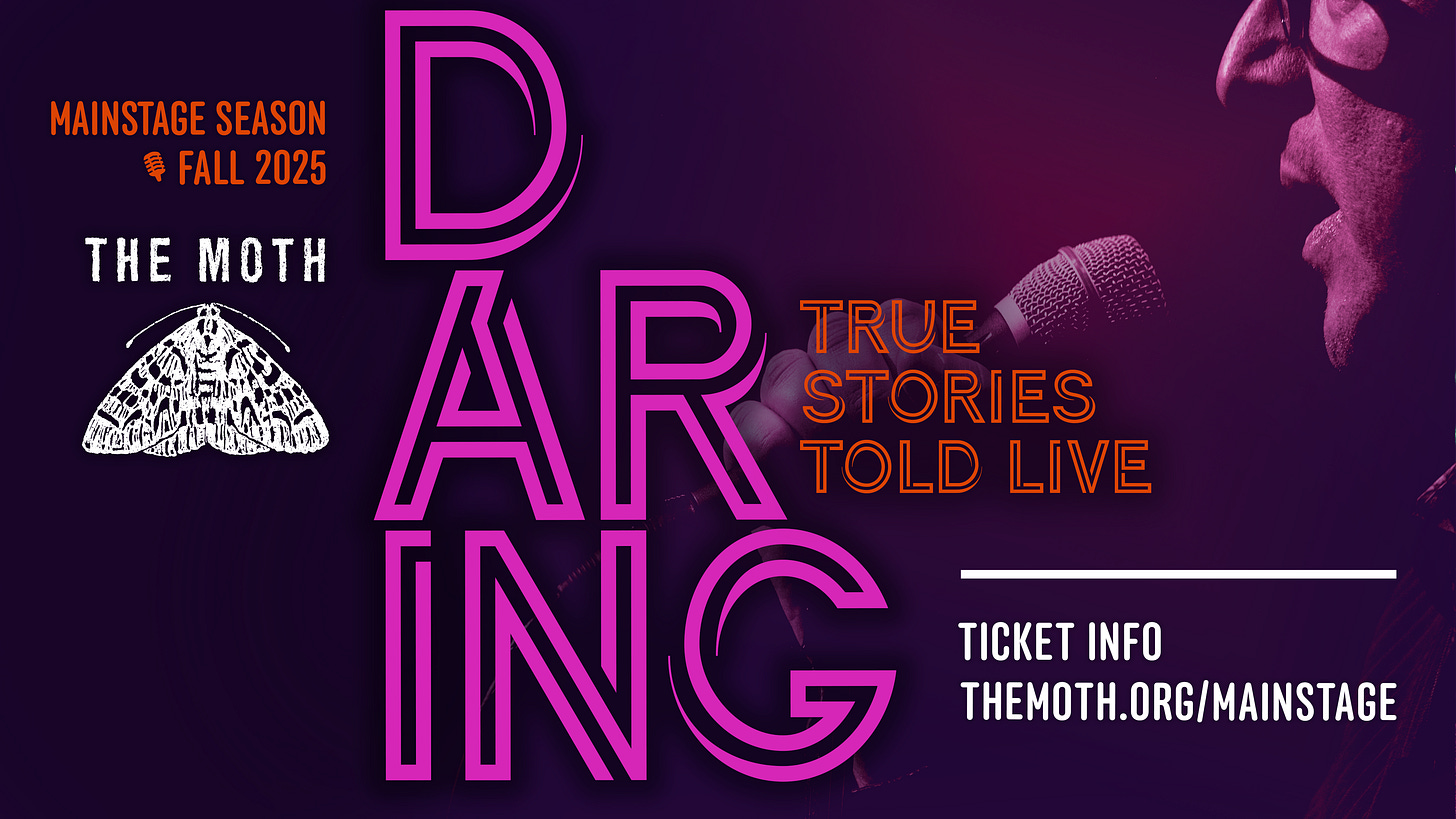
When’s the last time you did something…daring?

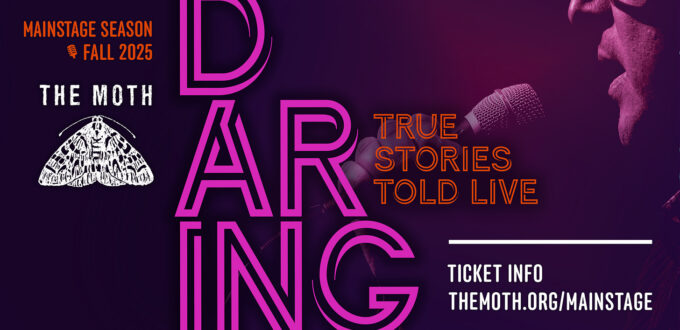
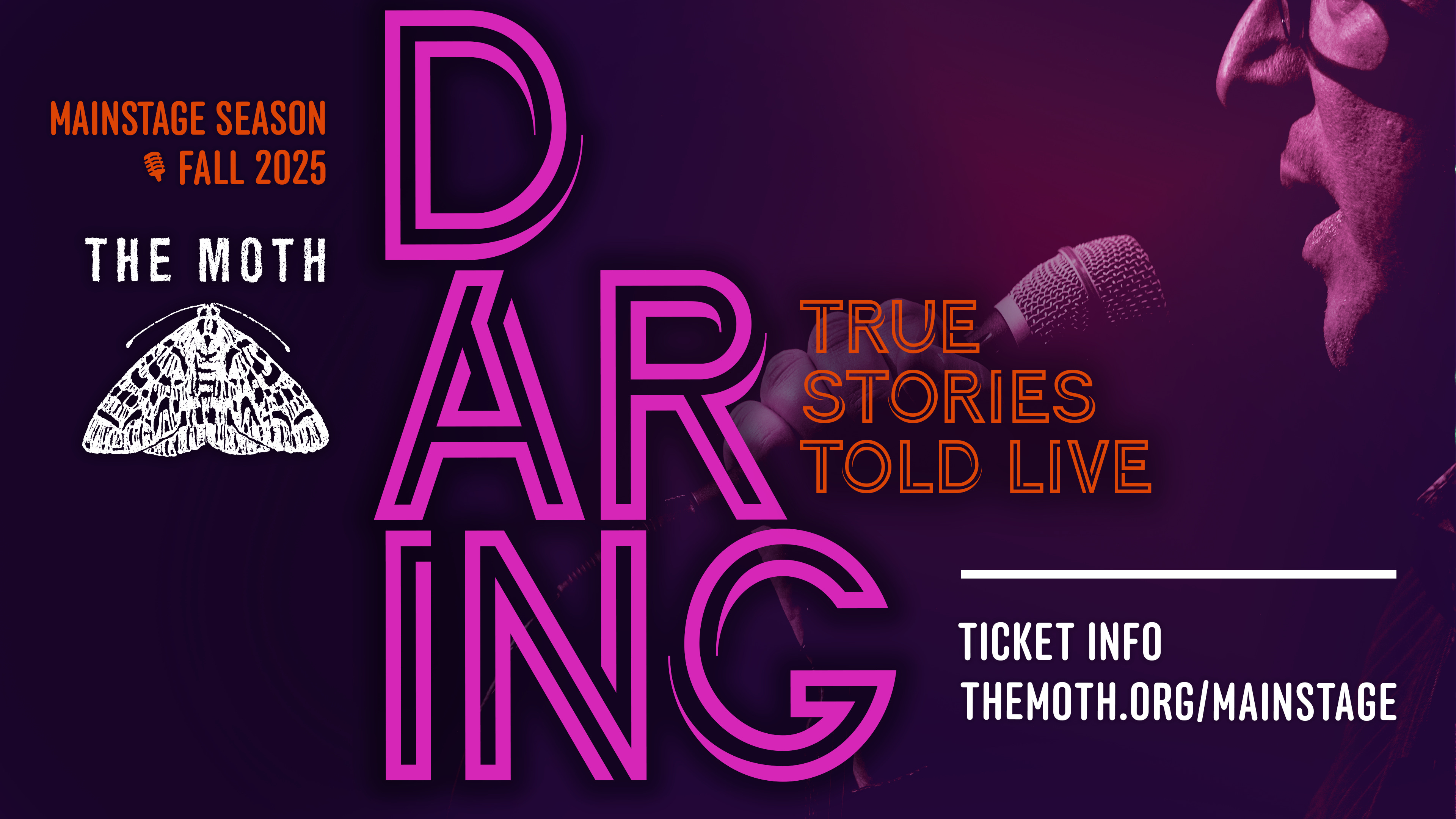
The Moth Mainstage season is now on sale—and this time, we’re doing something different. Each and every show, from New York to Nairobi, will be united by a singular theme: DARING. But the stories and

What makes someone leap without looking? What drives a person to risk everything? This season, we’re diving deep into the moments that define us—the split-second decisions, the life-changing gambles, the quiet acts of rebellion that reshape everything.

GET TICKETS!

Every Mainstage will feature five unique voices sharing true stories of bold risks, brave confessions, and moments that required everything they had. Stories that will make you laugh, cry, gasp, and maybe cover your eyes. Bold choices. Audacious proclamations. Courageous humility.

Join us as five storytellers take the stage and challenge what it means to be DARING.

Thanks for reading Capturing Voices! Subscribe for free to receive new posts and support my work.

ON SALE NOW

New York, NY
Symphony Space
September 18th

BUY TICKETS

San Francisco, CA
Herbst Theatre
September 18th

BUY TICKETS

Toronto, Canada
Koerner Hall

September 18th

BUY TICKETS

New Haven, CT
College Street Music Hall
September 25th

BUY TICKETS

London, UK
Union Chapel
September 26th

BUY TICKETS

Honolulu, HI Mainstage
Hawaii Theatre Center
October 3rd

BUY TICKETS

New Brunswick, NJ
State Theatre New Jersey
October 17th

BUY TICKETS

Boston, MA
The Wilbur
October 29th

BUY TICKETS

Nairobi, Kenya
Catholic University of
Eastern Africa

November 1st

BUY TICKETS

Philadelphia, PA
Miller Theater
November 7th

BUY TICKETS

Tulsa, OK
Cain’s Ballroom
November 19th

BUY TICKETS

Chicago, IL
Auditorium Theatre

November 20th

BUY TICKETS

Atlanta, GA
Center Stage
December 4th

BUY TICKETS

Portland, OR
Arlene Schnitzer Concert Hall
December 9th

BUY TICKETS

Austin, TX
Paramount Theatre
December 10th

BUY TICKETS

ON SALE SOON

Kansas City, MO
Folly Theater

October 17th

New York, NY
El Museo Del Barrio
October 24th

New York, NY
St. Ann & the
Holy Trinity Church

December 5th

FIND EVENTS NEAR YOU

More From The Moth

The Moth’s podcast feed presents episodes of The Peabody Award-winning Moth Radio Hour and original episodes of The Moth Podcast.

LISTEN NOW

Membership Perk: Complimentary Tickets!

Become a Luna Member and receive two complimentary in-person tickets to a Moth Mainstage! Additional benefits include presale access to StorySLAMs, reserved seating, and storytelling workshops. Plus, join before August 31st to get two extra months of benefits, free!

LEARN MORE

The Conscious Style Guide

love@consciousstyleguide.com

Read Online

A Note From the Founder

I’m bothered by the lack of distinction between generative AI and non-generative AI (also called traditional machine learning, traditional AI, analytical AI) in nearly all AI coverage and commentary.

Thanks for reading Capturing Voices! Subscribe for free to receive new posts and support my work.

Collapsing different types of AI into one term, “AI,” promotes confusion and misinformation about what we really need to pay attention to and be concerned about. When products, for example, are described as “using AI” or “having AI,” it tells me nothing about what is actually being used or whether there are ethical issues involved, e.g., theft of creators’ works by gen AI.

Continue reading on LinkedIn >

When Hyphenation Is Unnecessary

Chicago Manual / October 10, 2023 Updated August 12, 2025

Spotlight on CMOS 7.90 and 7.91

One of the main reasons to insert a hyphen between two words that aren’t normally hyphenated is to help readers sort out the text when those words are used as a compound modifier before a noun. For example, an apartment on the ninth floor of a building is a ninth-floor apartment; the added hyphen makes it immediately clear that ninth-floor is a single compound that modifies apartment.

Thanks for reading Capturing Voices! Subscribe for free to receive new posts and support my work.

Such hyphens make reading a little easier, but they also add a tiny bit of clutter to the page or screen. When comprehension isn’t threatened, they can often be left out.

The Case of the ‑ly Adverb

The classic example of when not to hyphenate a compound modifier involves ‑ly adverbs, like beautifully in the phrase beautifully behaved dog. The logic is that because beautifully is an adverb—and obviously so, thanks to that ‑ly ending—readers won’t need any help figuring out what modifies what.

There’s no such thing as a beautifully dog, not to mention a behaved dog that’s beautifully. So there’s no chance of a misreading.

This logic works well with Chicago style, which favors a “spare” approach to hyphenation, as described in the intro to the hyphenation table at CMOS 7.96. The gist of this approach is that when neither the dictionary nor the hyphenation table provides an answer, a hyphen should be added to a compound that doesn’t normally include one “only if doing so will prevent a misreading or otherwise significantly aid comprehension.”

In an earlier and somewhat more elaborately punctuated age, however, compound modifiers formed with ‑ly adverbs tended to get hyphens, as the following examples demonstrate:

In spite of her deeply-rooted dislike, she could not be insensible to the compliment of such a man’s affection. (Jane Austen, Pride and Prejudice, vol. 2 [London, 1813], 124)

. . . namely, the highly-prized spermaceti, in its absolutely pure, limpid, and odoriferous state. (Herman Melville, Moby-Dick; or, The Whale [New York, 1851], 378)

Her discretions interested him almost as much as her imprudences: he was so sure that both were part of the same carefully-elaborated plan. (Edith Wharton, The House of Mirth [New York, 1905], 6)

The point of resurrecting those dusty old examples is to show that adding a hyphen to an ‑ly compound isn’t the worst idea. Those words, after all, belong together.

But the earliest edition of CMOS, published one year after The House of Mirth first appeared, ruled against such hyphens (see 1st ed. [1906], ¶ 167). And according to the latest edition of CMOS and many other modern guides, even the most meticulously edited text can do without them (see CMOS 7.93).

Established Open Compounds

Extending the example of ‑ly compounds, a hyphen can often be omitted from other types of compounds that present no risk of a misreading. For instance, the unhyphenated examples in CMOS 7.90public welfare administration and graduate student housing—are perfectly clear as written.

That’s at least partly because both “public welfare” and “graduate student” are familiar as open compounds—​especially in the context of administration and housing. It wouldn’t be wrong to add a hyphen to either of those compound terms, but it’s unnecessary (see CMOS 7.91).

If you’re faced with a compound modifier that seems to work just as well without a hyphen as with, but you’re not quite sure, check the dictionary. If the term is listed there as an open compound, the hyphen can probably be left out; otherwise, go ahead and add one.

For example, the phrase high school diploma (no hyphen) seems just as clear as high-school diploma (hyphen); not only is high school diploma a familiar phrase, but you’d have to make an effort to misread it. And the term high school is listed in Merriam-Webster as an unhyphenated noun, so in this case the hyphen can be left out. If you need more evidence than that, Merriam-Webster also includes an entry for high school reunion—no hyphen.

In less clear-cut cases, a hyphen will usually be the better choice. For example, the compound high drama is entered as a noun in Merriam-Webster, but that term isn’t all that common as a modifier. So a phrase like high-drama situation is best hyphenated in accordance with CMOS 7.96, section 2, under “adjective + noun.” And in some cases, dictionaries will list a hyphenated adjective form—as with high fidelity (n.), high-fidelity (adj.).

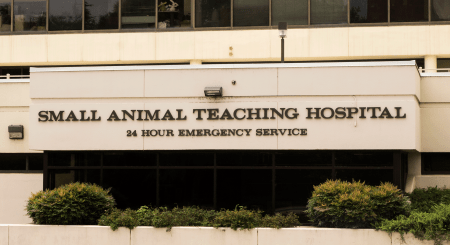
How Small Is That Animal Hospital?

Sometimes a hyphen in a compound modifier does more than simply make reading a little easier—it provides essential information. Take the example of a small-animal hospital. Without a hyphen, the phrase might easily refer to a small hospital for animals. With a hyphen, the phrase clearly refers to a hospital for small animals.

And that’s what we’d recommend—in general contexts (see also CMOS 5.96).

But let’s say you’re writing or editing an article for The Veterinary Journal, a peer-reviewed scientific journal established in 1875. Here are a few excerpts from “Effect of Attire on Client Perceptions of Veterinarians,” by E. Bentley, H. Kellihan, C. Longhurst, and R. Chun, from volume 265 (2020):

Clients volunteered to answer a survey in the small animal waiting area over a 3-month period.

Only three studies have examined veterinarian attire and client perceptions in veterinary medicine. In the first, 154 clients of a 24-h small animal emergency clinic were surveyed about their preferences of dress for veterinarians in a variety of situations.

Respondents were recruited by signs placed in the University of Wisconsin Veterinary Care (UW Veterinary Care) small animal hospital waiting area.

The Veterinary Journal isn’t averse to hyphens, as this sentence from the same article’s introduction shows (not to mention the modifiers “3-month” and “24-h” in the examples above):

The purpose of this study was to do a large-scale survey of the clientele of an academic teaching hospital to determine the influence of attire on client perceptions of veterinarian competence and comfort with veterinarians.

The point is that in this journal—one in which “small animal” is a frequently used phrase that has a specialized meaning (think cats, dogs, hamsters, etc.)—the hyphen simply isn’t considered necessary. Everyone—meaning anyone who would read something in a veterinary journal (and not only those who are members of the British Small Animal Veterinary Association)—knows what “small animal hospital” (or clinic or whatever) means.

But in more general contexts, a hyphen is more likely to be used, as in the journal PET Clinics. (Note that PET stands for “positron emission tomography”—an imaging technology that can be used on both humans and animals. The acronym doesn’t have anything to do with pets.)

In the 2020 article “Advances in Preclinical PET Instrumentation,” by Mahsa Amirrashedi, Habib Zaidi, and Mohammad Reza Ay, which investigates the use of PET scanners on small animals, the phrase “small animal” is hyphenated as needed:

Salient progress and considerable advances in small-animal PET imaging has had and will continue to have a far more profound effect on drug development and biomedical research.

The IRIS PET from Inviscan (Strasbourg, France) represents the latest generation of commercial small-animal scanners operating either in rotating or stationary modes.

The other key factor that should be taken into account when devising a small-animal scanner is the shape of the detector arrangements.

Those hyphens help readers who aren’t necessarily immersed in the world of small-animal care understand that we’re talking about small animals, not small scanners.

Takeaway

When in doubt about whether you should add a hyphen to a particular compound modifier before a noun, lean toward hyphenation, which is almost never wrong. But to avoid cluttering your documents with unnecessary hyphens, consider what works best in any given context—while also consulting the hyphenation guide in CMOS and the dictionary entries from Merriam-Webster.

Any small animals in your life probably won’t appreciate your attention to detail, but human readers just might.

Thanks for reading Capturing Voices! Subscribe for free to receive new posts and support my work.