But can we better understand the nature of law itself through a study of culture?
In other words, is there law in culture, and conversely, is there culture in law?
It’s about the forms of expression that shape our political moment and the quieter, everyday forms of expression the law often fails to see. It’s about what we protect, what we silence, and what we misname. In many ways, it is about this newsletter—the need to ground conversations about law and law reform in the lived experiences of ordinary people.
Listen to post · 26:17
Earlier this year, I had the honor of delivering the Keynote Address at the Twenty-Seventh Annual Conference of the Association for the Study of Law, Culture, and the Humanities, held at Georgetown Law School on June 17–18, 2025.
It was a gathering of scholars, writers, artists, and practitioners who care deeply about the ways law shapes our cultural lives—and the ways culture, in turn, shapes the law.
This keynote grows out of that conversation.
It’s a talk about speech—spoken and unspoken, celebrated and suppressed.
It’s about the forms of expression that shape our political moment and the quieter, everyday forms of expression the law often fails to see. It’s about what we protect, what we silence, and what we misname. In many ways, it is about this newsletter—the need to ground conversations about law and law reform in the lived experiences of ordinary people.
And it begins with a childhood memory.
I share it with you here not simply as a transcript of a public talk, but as an invitation to think alongside me about how culture makes law, how law remakes culture, and what it means to recognize the full spectrum of human expression as worthy of protection.
Cultural Expression as Legal Speech
Today, speech is both everywhere and under siege.
From misinformation and hate speech to book bans and criminal prosecutions, some call this a golden age for expression, and others call it an iron one. Legal systems across the globe are scrambling to define acceptable speech, regulate contested information, and manage the expressive acts that shape our political, cultural, and moral lives.
But as we debate these high-profile flashpoints, I want to begin somewhere quieter. Somewhere personal. I want to begin by telling you about Nolan Brown, and a different kind of speech that matters.
His story reminds us that not all speech looks like speech. Some of the most powerful expressions in American life—Black vernacular, fashion, music, swagger, silence—are too often dismissed by law as noise, defiance, or disorder. But these cultural expressions are not just performances of identity or style. They are acts of meaning-making. They are speech. And our failure to treat them as such reveals the deep limits of how the law sees—and fails to see—Black life.
I didn’t have that language back then.
But I felt it. Even as a young boy, I felt it in the way Nolan moved through the world, and in the way we all watched him move. If Nolan and I were to get into a fight, it would be him—hard shoulders inching toward six feet tall above basketball-sized hands—against me, a pudgy five-foot-five with Harry Potter frames and a sagging JanSport bookbag full of textbooks.
He’d throw hands like a youthful Mike Tyson, and I’d duck and weave on the cracked asphalt like an aging Muhammad Ali, dancing clumsily while admiring his gleaming Nike Air Jordans and oversized Rocawear jeans. Nolan would smack my bicep until its caramel hue matched his dark-brown sheen, and I’d eventually give in, as I so often did, because hanging out with Nolan Brown was kind of a big deal.
Nolan was the kind of kid every Black boy in the South Bronx wanted to become.
Including me.
Beginning with Nolan clarifies how the figure of a person racialized as Black—someone embodying a trendsetting popular culture celebrated by mass media—reveals the paradox of law in a society shaped by liberal capitalism, constitutional republicanism, and a long history of legally sanctioned racial injustice. Black bodies are essentialized on the covers of hip-hop magazines like The Source or XXL—a swaggering aesthetic adorned with modern luxuries—even as Black communities battle socioeconomic landscapes marked by physical decay and human loss.
For Nolan and other Black boys navigating racial bias, stereotypes like chronic misbehavior or disorderly conduct are not just societal narratives—they’re inscribed and reinforced by law. The legal system, shaped by cultural perceptions of Blackness, defines and applies rules in ways that sustain these stereotypes, often cloaking Black boys in the expectation of criminality.
Some scholars like Naomi Mezey have argued that law can reasonably be considered synonymous with American culture. It certainly felt that way to thirteen-year-old me. The beliefs, practices, and norms that governed life in my South Bronx neighborhood carried the weight of law, shaping a world where Black boys were always running from trouble—or at least that’s how it seemed to me.
When Nolan and I broke the neighbor’s car window while playing catch, I ran home convinced I was the innocent one. It was Nolan’s wild arm, his bright idea to turn a dirt road into our field of dreams. And, in my eyes, the evidence was conclusive. Nolan took the blame, confessed to his dad, and was punished with sharp words that faded into quiet sobs. And, by the next day, we were back to playing, Nolan quietly washing away my guilt with a soft smile.
“You mad?” I muttered through burning cheeks.
“Nah, you good,” he said, a sparkle in his brown eyes.
That was the usual ending to our adventures—a brush with legal culture that reinforced stereotypes about the Black racial subject, followed by laughter that restored our individual and collective dignity.
I believe this moment captures something essential about how speech matters in ways that transcend current debates about regulating expression. Nolan’s speech—his cultural vernacular, his embodied presence, his very existence as expressive activity—was already being regulated, suppressed, and instrumentalized by law long before he ever opened his mouth.
As we grapple with new legal tools to combat threats, harassment, and hate speech, we must ask: what forms of expression are we failing to recognize as speech at all?
Robin West once wrote that while we can “read literature for its substantive contribution to our understanding of law,” no analogous approach exists for cultural-legal scholars. In other words, we haven’t read culture deeply enough to enrich our understanding of what law is.
Today, I want to suggest something simple yet urgent: exploring the depths of Black culture and the breadth of Black lived experience—its joy and pain, its poetry and its protest—is essential to understanding what law means in America.
From a literary perspective, reading Black culture alongside legal texts—the approach of law-and-culture—shows how legal meaning is built, lived, resisted, and transformed in daily life. From a jurisprudential perspective, reading the legal system itself as a cultural text—the approach of law-as-culture—helps us see how anti-Blackness and White supremacy are not outside the law, but embedded within its very formation. Culture doesn’t just reflect the law; it makes it.
But can we better understand the nature of law itself through a study of culture?
In other words, is there law in culture, and conversely, is there culture in law?
This approach reframes our current debates about speech regulation. In this era of book bans and prosecutions for expressive activity, the question isn’t just whether law can be read like literature—but how cultural narratives determine what kinds of expression are even recognized as “speech” worth protecting.
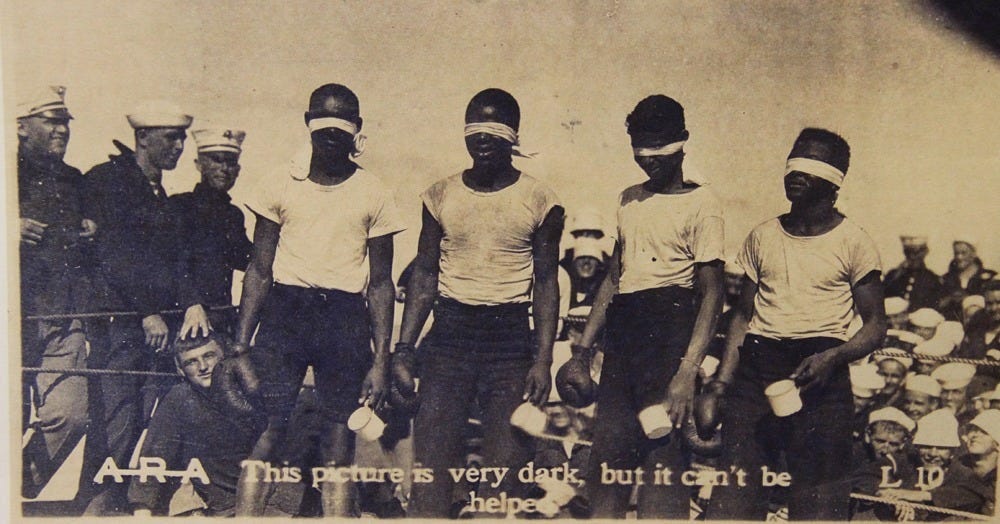
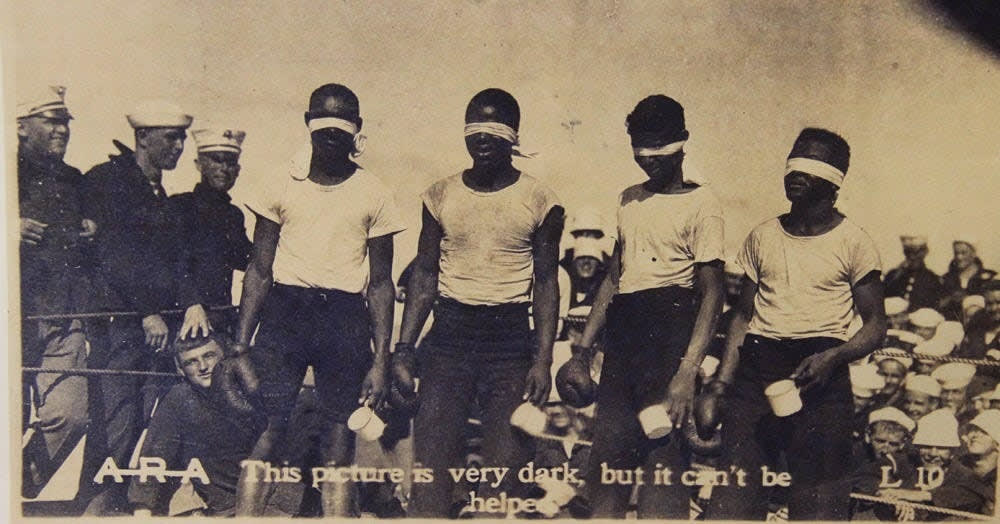
Consider Ralph Ellison’s Invisible Man and its infamous Battle Royal scene. The narrator is invited to deliver his graduation speech to White civic leaders in his community but must first endure a blindfolded boxing match for their entertainment. Ellison reveals American legal culture as driven by “an erotic lust for materialistic self-interest and fleeting self-gratification.” The blindfolded Black boys fight while White men place bets on them, exposing both the spectacle and exploitation that underpin Western legal culture.
Black counternarratives—through the Civil Rights and Black Power movements; the prophetic witness of jazz; the blues sentiment of hip-hop; the communal ethos of DJs, breakdancers, and graffiti artists—have too often been left out of such discourse. Hip-hop, in particular, embodies the endurance of Black radicalism and its engagement with American legal meaning. Yet its message is frequently silenced in political spaces and commodified in the capitalist marketplace.
Perhaps law’s treatment of Black culture reveals less about so-called Black deviance and more about the cultural production of legal meaning. Perhaps the eroticized fantasies of Black life relegated to the social periphery—or to the hidden ballrooms of White supremacy, as Ellison portrayed in his novel, Invisible Man—are, symbolically, central to American law itself.
Reading Black literature in this way reveals what traditional legal scholarship often misses: that law often operates not through neutrality but through racialized spectacle, targeted commodification, and strategic violence.
The weaponization of culture in politics—what Antonio Gramsci called the struggle for cultural hegemony—underscores culture’s central role in liberal democratic debates about rights, privileges, and citizenship. As Raymond Williams once wrote, our political “culture wars” are ultimately battles over “a particular way of life.” Today’s speech regulations must be viewed within this broader context of cultural suppression.
We see this cultural policing historically too.
Take President Reagan’s use of the “welfare queen” trope during his 1970s campaign. It wasn’t framed as a critique of law’s failure to meet the material needs of low-income women. Instead, Reagan used cultural rhetoric to pathologize marginalized people, leading voters to see Black women on welfare as lazy and irresponsible. This narrative fueled racially biased legal reforms that benefited corporations and the wealthy.
Let me offer a concrete example of how cultural policing operates in modern life. When twenty-three-year-old Amadou Diallo—a West African immigrant and street vendor mistaken for a serial rapist—was shot forty-one times by four plainclothes NYPD officers outside his Bronx apartment, my childhood friend Nolan wouldn’t mention it.
Instead, Nolan and I hurried home past the heavyset preacher with permed hair shouting into a megaphone at the protest near the bus stop, only three blocks from the alley where we had broken my neighbor’s car window. Later, Nolan would ask if I wanted to play basketball in the back driveway, or Metal Gear Solid on my PlayStation One.
Even though NYPD Commissioner William Bratton had pledged to “reclaim the streets,” the law in our neighborhood meant surveillance for working-class immigrants and Black folks hustling to make ends meet. It felt safer to lose ourselves in video games and hoop dreams. Our innocence flourished behind chain-linked fences, where polite smiles met patrolling officers who had already judged us guilty by association. Our concrete playground was a holding cell in disguise.
The legal fiction of reasonable suspicion was reaffirmed by Diallo’s death, justified by the perceived threat of his presence. In response, we developed a Black legal culture of fearing and avoiding the police.
And that culture, in turn, became our law.
In class, Nolan and I would rise each morning, our chairs scraping the wooden floor in unison, our right hands pressed firmly over our chests as we pledged allegiance to the flag—a carefully orchestrated lesson in American patriotism. The flag stood for a nation committed to republicanism, liberty, and justice for all.
Yet this daily ritual also served as a balm, soothing the dissonance we felt living in the Bronx. Despite the poverty, crime, and policing surrounding us, the pledge implied that America wasn’t the problem. Instead, it suggested that the source of our inequities lay elsewhere—not in our law, but in our culture.
When we silence cultural voices that expose these contradictions, we lose the ability to see how law truly operates. At thirteen, it often felt like Nolan and I were playing a different game entirely. As neighborhoods around us gentrified—pushing our Black and Latinx families out and bringing wealthier professionals in—we were told the law guaranteed fair housing. As police swarmed our streets, stopping and frisking boys who looked like us while wealthier neighborhoods enjoyed peace, we were told the law protected us from “unreasonable searches and seizures.”
Like Ralph Ellison’s narrator in Invisible Man, I often felt like I was dancing around trouble in the Bronx like an anxious boxer in a crowded ring, eager for my moment to speak, to prove I belonged in the rooms of power. But that dance is not incidental, it is strategic. It preserves law’s illusion of neutrality by muting the voices that expose its cultural and political dimensions.
Today’s attacks on Black and LGBTQ+ authors through book bans, the dismantling of DEI programs, the surveillance of protest culture, and academic restrictions on cultural critique are not isolated events. They are systematic efforts to suppress expressions that challenge dominant legal and political narratives.
What makes this suppression so insidious is that it operates by denying that these forms of expression are speech at all. Hip-hop culture, street vernacular, embodied protest, communal storytelling—these are cast as “conduct” rather than expression, as “disorder” rather than discourse, as incivility or riots rather than reasoned dissent or democratic engagement. The regulatory frameworks that emerge treat cultural expression as something to manage and contain, not protect.
As we develop new legal tools for our contemporary speech challenges, we must confront how law conceptualizes, regulates, commodifies, and instrumentalizes expression in its broadest sense. As Austin Sarat and Thomas Kearns argued, law is unique among cultural institutions because it has “meaning-making” power. The very language of law becomes a communal text, shaping not only what people believe is true, but what they believe is right.
When law frames Black culture and the cultures of other marginalized communities as antithetical to American cultural traditions—instead of integral to its pluralism—it draws fictitious boundaries around what counts as civil, legitimate, or deserving of respect. These boundaries determine who is seen as an insider and who is kept outside, what’s considered “civil” modes of human engagement, while masking the fundamental role that culture plays in shaping law’s meaning and legitimacy.
Beyond the legal academy, cultural-legal studies links directly to broader social movements that recognize the intertwined nature of law, culture, and power. Movements for racial justice, labor rights, environmental justice, and reproductive rights have long understood that legal change is not simply about passing new laws and policies but about shifting cultural narratives that justify systems of oppression.
Take the Movement for Black Lives. Its work is not limited to advocating policy reforms. It’s also about reimagining the very purpose of policing. By reframing policing as a tool of racial and economic control rather than public safety, it challenges the cultural assumptions that sustain criminalization and legal violence.
In this political moment—flooded by disinformation, besieged by far-right speech, and defined by the suppression of marginalized voices—we need tools that account for the full spectrum of human expression. The law-and-culture conversation can no longer be confined to elite institutions. It must extend to communities whose expressive lives are denied legal recognition as “speech” worthy of constitutional protection.
The narrator in Ellison’s Battle Royal is forced to confront the bitter truth that his scholarship—once viewed as a symbol of success within the confines of Jim Crow America—might actually be a tool of subjection. In a dream, while attending a circus with his grandfather, he finds himself opening an endless series of envelopes until he discovers a single note that reads:
“To Whom It May Concern… Keep This Nigger-Boy Running.”
I, too, have come to realize that there is a part of my own story—and my scholarship—that feels inherently devious. I carry a quiet awareness that Black culture often feels like a hopeful attempt to conjure laughter in the midst of America’s ongoing circus. A joke told to keep from crying. A dance performed until the pain of Black letter law is momentarily eased.
If there is one idea I hope you carry with you, it is this: law is never neutral.
It is shaped by culture—and in turn, it shapes how we understand power, justice, and democracy. Law doesn’t live only in statutes or courtrooms; it’s embodied, narrated, contested. It is a language of power, and it can be used to either oppress or liberate.
Legal discourse too often presents law as detached from the social forces that give it life. But culture—through stories about crime, race, poverty, and belonging—guides not only public perception, but legal doctrine itself.
Legal transformation is always cultural transformation.
That means the fight for free speech is not simply about preserving rights—it is about expanding recognition: of whose voices matter, whose stories are heard, and whose truths are protected.
If we are serious about justice, we must critique not only the legal texts that constrain us but also the cultural narratives that justify our subjugation. We must ask not just what the law says, but what it silences.
And that requires courage.
Courage to listen. Courage to imagine otherwise.
Courage to speak when the law forgets how to.
Thank you for reading and thinking alongside me.
If this keynote resonates, I hope it sparks conversations in your own circles about how law is lived, felt, and shaped from the ground up.
As always, I’m grateful to share this space with you.
In solidarity,